
Today's Parents Have Zero Interest In 11 Old-School Traditions Their Parents Loved
 PeopleImages | Shutterstock
 Family traditions have been found time and again to be beneficial for kids. Still, not every old-school tradition will be missed once it fades away. After all, today's parents feel less pressure to conform to old-fashioned traditions. If it doesn't work for them, they have zero interest in continuing.
Sadly, some of these traditions have disappeared because families have less time, less connection and less financial opportunities. Regardless of the reason today's parents aren't following the traditions, hopefully they will someday return in ways that work for a new generation.
Today's parents have zero interest in 11 old-school traditions their parents loved
1. Library visits and storytime
 StockPhotoDirectors | Shutterstock.
While some teachers and professionals argue it’s largely a school’s responsibility to teach kids to read, the practice starts at home. Previous generations had traditions like bedtime stories, library trips and "quiet hours" where kids and parents alike spent time reading, coloring or doing other quiet actiities.
According to EducationWeek, children are spending more time on screens than ever, and, unfortunately, less time reading, including with their parents at bedtime. According to EW's report:
"Reading aloud is a shared experience that builds human connections and provides children with a model of what good reading sounds like, especially if the reader uses expression and dramatizes the story even a little bit,” said Sue Corbin, a literacy specialist.
Reading to young children has been shown to increase their vocabulary and literacy, asl well as understanding of the world and others' emotional experiences.
Experts at the Literary Hub acknowledge that reading at home, especially regularly and with other family members, sparks better proficiency alongside classroom instruction, however it’s clear that this tradition is slowly fading away.
2. Passing down heirloom items
 Fizkes | Shutterstock
While older generations of parents and grandparents might have cherished the keepsakes and heirloom items of their family, new generations of kids are less fortunate. Jewelry, furniture and keepsakes are no longer seen as treasures, in part due to the availability of these items for relatively cheap compared to the past.
With less than 39% of young adults owning homes in today’s society compared to nearly 50% in the 1990s, there’s little storage space for families who would want to continue passing down luxury furnishings or larger keepsakes for their kids. After all, without the security of home ownership, owning items that last a long time can become a burden,.
Another contributing factor is quality. For modern families hoping to continue the tradition for their kids, the feasibility of passing down smaller items isn't all that realistic, with quality standards decreasing in everything from clothing to furniture, and making longevity near impossible.
Finally, culturally, antiques and knick-knacks are no longer considered treasures (or even obligations) to the degree they were in the 20th century with aesthetics trending toward more sparse, simple interiors. Furniture like curio cabinets china cabinets fell out of favor in the 1990s, though reportedly there has been a bit of a comeback for these display cases of late!
3. Physical family photo albums
 Dragon Images | Shutterstock
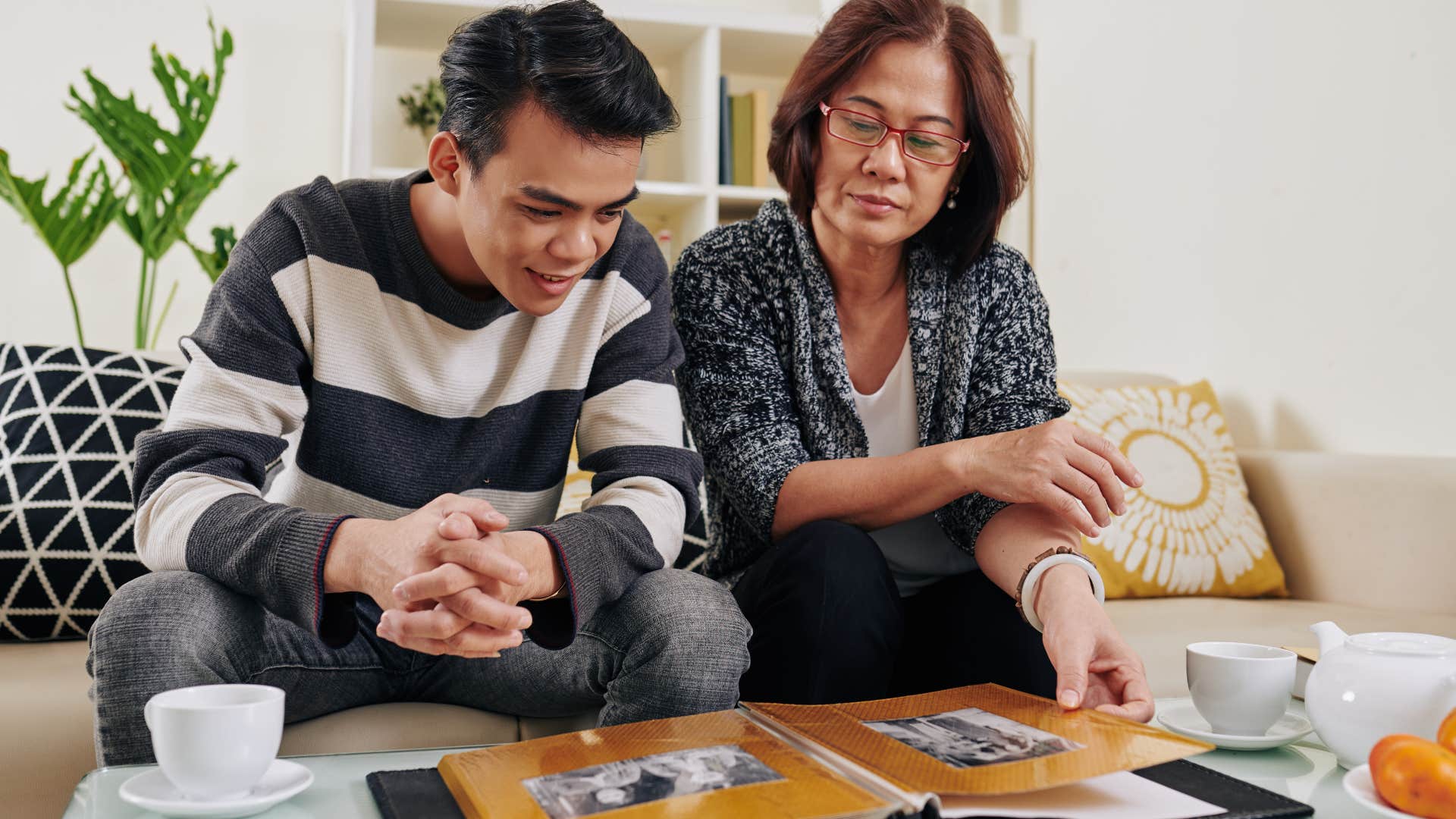
With the rise in digital technology and social media, many modern families are steering away from physical photo albums and scrapbooks to save time, money, and space. Often, these are replaced with photo frames that families load up with photos that scroll through a large selection of digital images.
While many argue for the resurgence of this old-school tradition, the feasibility of developing photos, purchasing albums, and finding the time to create them is much more difficult today with parents working multiple jobs and kids engaged in more activities than ever.
Still, if you've ever attended a family reunion or spent time with an older relative, there is something magical about flipping through the pages and seeing a wide variety of photos on each page. The different sizes, types of printing paper, and even the handwriting that labels the photos in the albums adds to the feeling like you're part of history, not just looking at yet another screen.
4. Large ‘family style’ dinners
 PeopleImages | Shutterstock
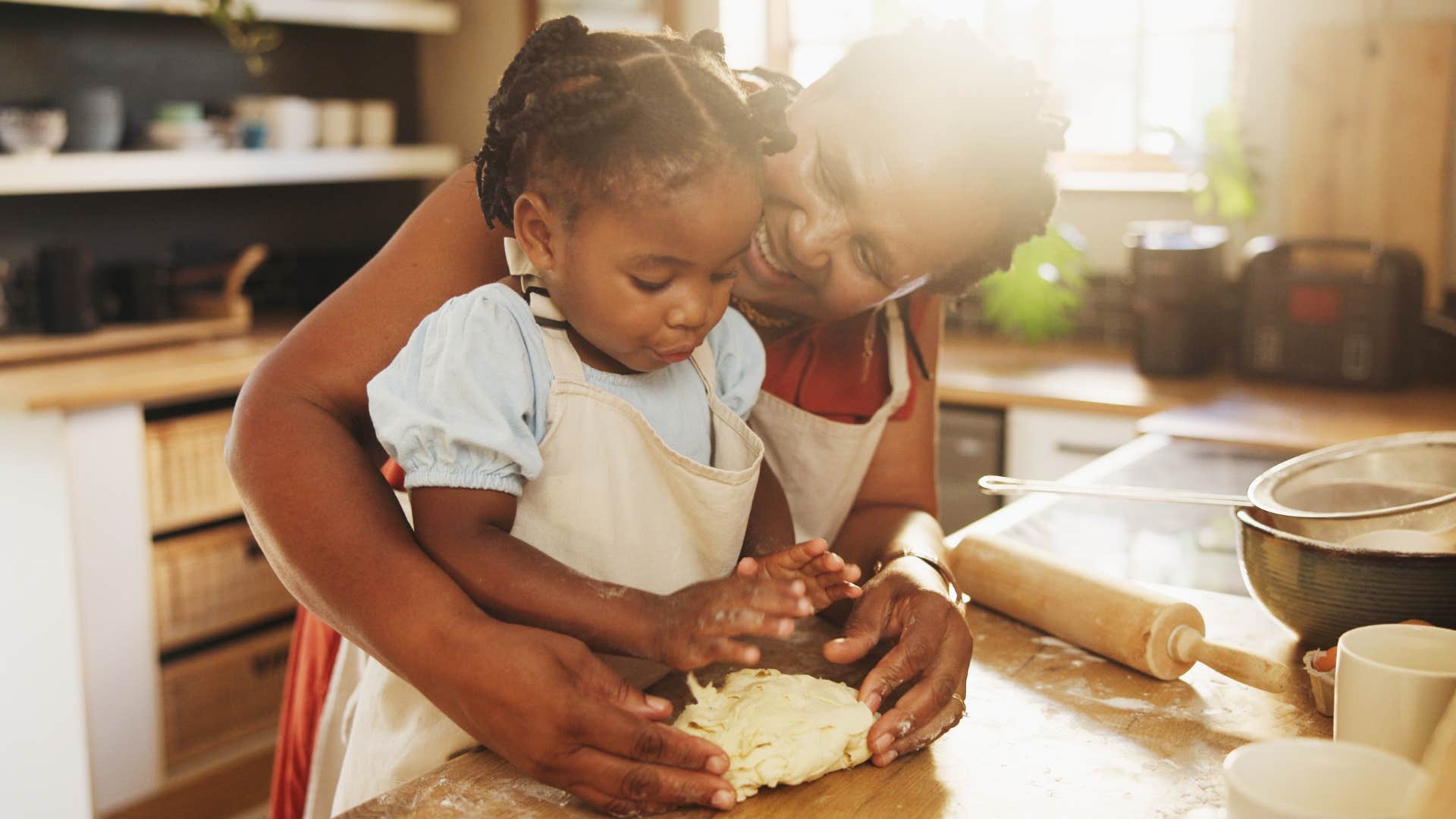
According to The Family Dinner Project, a non-profit devoted to helping people plan and execute more family dinners, fewer than 30% of modern families eat together regularly, compared to between 70 and 80% in the early 1990s.
Their website explains that "Over the past 25 years, research has shown what parents have known for a long time: Sharing a fun family meal is good for the spirit, brain and health of all family members. Recent studies link regular family meals with the kinds of behaviors that parents want for their children: higher grade-point averages, resilience and self-esteem."
Additionally, their site explains that family meals are linked to lower rates of:
- substance misuse
- teen pregnancy
- eating disorders
- depression
- and more
There are many reasons the number of family dinners have been decreasing, but one big reason is the number of homes without one adult who is dedicated as a stay-at-home parent. In addition, as one advocacy organization explains, "Mothers work 300 more hours per year than they did in 1977, while fathers’ hours at work are broadly unchanged, according to a new Institute for Women’s Policy Research (IWPR) report..."
As more parents work outside the home, including at second jobs and children fill their schedules, the family dinner tradition has fallen off, and this generation appears to be suffering negative effects as a result.
5. Sending out physical letters or holiday cards
 takayuki | Shutterstock
The growth of digital technology in modern households has affected many old-school traditions, including the tendency for families to send out holiday cards or write handwritten letters to their loved ones. Instead, a text, phone call, or virtual announcement will do, helping families do more in an era of convenience.
Surprisingly, despite being one of the old-school traditions modern families are leaving behind, the slight disappearance of handwritten letters and holiday cards isn’t purely out of distaste. In fact, many people still enjoy receiving them, even if they’re not personally sending any out.
6. Dedicated family time without technology
 arda savasciogullari | Shutterstock
Despite Pew Research Center data that suggest spending time with family is a top priority and valued habit in many households, the majority of modern families aren’t indulging in quality time together to the same extent that many were just a few decades ago.
According to research, the average American family only spends around 6 hours of time together weekly, compared to an average of between 12 and 20 hours in the 1990s.
With busy schedules and escapist technology habits, it’s become increasingly difficult to prioritize this quality time in modern households. Even when they are together, they’re likely engrossed in their own hobbies and habits, from increasingly high stacks of homework to working even while off the clock.
For some families, religious traditions like Sundays dedicated to church and family time or Shabbat dinners on Fridays and walking to services on Saturday have helped protect their dedicated family time. Even secular families look to these models for inspiration, doing their best to set rules around tech and schedules in order to try to recreate the connection time they had in the past.
For today's parents, however, setting aside that time can feel nearly impossible with activities and even work expectations.
7. Making and keeping family recipes
 Prostock-studio | Shutterstock
Fewer modern families are preserving, saving, and using family recipes today. While this is largely due to time constraints, technological accessibility, and a shift away from homemade meals in many households, it is also likely because of differences in taste and dietary needs.
For example, cream-based casseroles and jello deserts that grandmother created in the 1950s and mothers served in the 1980s are no longer considered healthy, outside of traditional family events like funerals or Thanksgiving dinners. Today's parents balk at the saturated fat or the food colorings, not to mention the time it takes to prepare them, even when they do treasure the hand-written note cards with the recipes on them.
However, there’s hope for a future resurgence of this old-school tradition, as many Gen Zers have reported a higher commitment to nutritional meals and ingredients in recent years, stemming from health concerns. Now, they're back to looking for whole ingredient recipes made with real foods, like their grandparents used to make.
8. Renting films for movie nights
 PeopleImages | Shutterstock
With so many children spending time on their own tablets while their parents do work or watch their own screens, family movie nights have all but gone the way of the Dodo. While it may be handy and convenient to share a screen, with no bickering over what title to watch, family movie night has a lot of value.
First, kids have to learn to compromise with their siblings, parents and maybe even grandparents in order to settle on a movie. Movie night gives parents an opportunity to model compromise and negotiation for their kids in ways that are low-stakes and even fun.
These days, movie night should be even easier, with so many families subscribing to at least one streaming service with thousands of titles to choose from. And, according to Statista data, the average streaming service costs users between $10 and $23 per month in general, a much more affordable option for renting movies over old-school traditions like drive-in movies, theaters, and renting from stores or DVD boxes.
Especially considering the downward trend in family quality time, it’s not surprising that other niche activities like movie nights have also taken a turn towards fading away.
9. Kids moving out of the family home after high school
 Ground Picture | Shutterstock
While new adults as young as 18-years-old were moving out of their family homes to start their own lives just a few decades ago, surveys from the Pew Research Center have reported a dramatic shift in this old-school tradition. More than 88% of young adults aged 18 to 29-years-old are still living with a parent today, compared to an average one-third in the 1990s. This is the highest number since the Great Depression!
Their research also revealed that the number of households headed by this age group has drastically decreased, even in a few months — like the 12% decline between February and July 2020.
Unsurprisingly, the financial barriers and debt this age group has encountered early in life is to blame for this massive shift, influencing their ability to purchase homes, save money, and prepare for their financial futures. But there may be even more to this, something sweeter. Families today are more likely to resist cultural pressures that don't work for them, a willingness to go against the grain.
If their adult child turns 18 or even 21 and it makes sense for them to live at home, they'll often make it happen. With less shame around this happening, families are taking advantage of the opportunity to enjoy more time with their adult children before they leave the metaphorical nest.
10. Father-daughter dances
 Mladen Zivkovic | Shutterstock.com
A fundamental staple for traditional American families just a few decades ago, captured in millions of family photo albums, the “father-daughter dance” is another one of the old-school traditions modern families are leaving behind.
This could be because of less traditionally gendered traditions replacing this old-fashioned one, but it could also be because so many more households have only one parent at home, and around 80% of those parents are moms.
There may also be a political reason for this tradition to be falling off. Despite father-daughter dances having the appearance of an age-old tradition, they actually rose to popularity in the 1990s, originally called Purity Balls.
While they are often organized by schools and other secular organizations today, the roots of this tradition lie in what's now know as "purity culture" within the Evangelical and the LDS churches.
Originally, these events were based around an exchange of purity rings, where little girls received a ring from their father in a ceremony that's eerily reminiscent of a wedding ceremony. The girl makes a pledge to her father to remain "pure" or chaste in a Biblical sense until she's married.
The purity ring/vow exchange tradition has fallen off in more mainstream church culture, so it's not surprising that daddy-daughter dances have become less popular, too. Still, it seems like this type of event would be beneficial for families when updated to reflect our more egalitarian and empowered culture.
11. Coming home for the holidays
 Fizkes | Shutterstock
It used to be common for family members from all corners of the country (or even international!) to travel back to the extended family home for the holidays. Whether it's Thanksgiving, Christmas or Passover (or any others, of course), people used to take trains and drive very long distances to be with family. Aunts, uncles, cousins and grandparents made sure to be together.
What has change? Well, people often have less time off of work these days, making it harder to travel. Families also often have less disposable income for traveling, and gas prices continue to skyrocket.
Culturally, events like Friendsgiving have risen in popularity, with some people choosing to spend time with friends rather than family. This could be for financial reasons, but it could also be due to the rising number of young people who go no-contact with their parents.
On a positive note, platforms like Zoom and FaceTime that allow family members to connect and share special holiday moments, even when travel isn't feasible.
Zayda Slabbekoorn is a staff writer with a bachelor’s degree in social relations & policy and gender studies who focuses on psychology, relationships, self-help, and human interest stories.

