
10 Ways '80s Kids Tried To Do Better Than Their Own Parents, But Accidentally Made Things Worse
 Dean Drobot | Shutterstock
When people from older generations point fingers at Gen Z for what they see as a lack of work ethic, a sense of entitlement, or an inability to be self-sufficient, they're likely overlooking the fact that, in many ways, childhood was never the same after the 1980s. Many of the major changes in parenting, schooling, and the world in general since those golden days have had a lasting impact on just about every aspect of Gen Z's lives.
Research shows this is far from the first time in history that older generations have complained about younger generations, but that doesn't mean there isn't some truth to what they say. However, it's not all young people's fault. Doing things like putting kids on high alert for stranger danger or revving up the pressure to be super high achievers had some not-so-great consequences that younger generations can't help but be shaped by.
Here are 10 ways '80s kids tried to do better than their own parents, but accidentally made things worse:
1. They constantly warned their kids about 'stranger danger'
 Olena Yakobchuk | Shutterstuck
One way '80s kids tried to do better than their own parents was by constantly warning their children about "stranger danger." Beginning in the late 1970s, there was a sharp increase in public awareness about (and fear of) random kidnappings of children, which made many parents determined to be more cautious than the generation before them.
The widely reported abduction of Adam Walsh in 1981 made a huge impact, and when Adam, the movie based on his story, was released in 1983, parents everywhere became terrified that their child might suffer the same fate. Before long, kids were sitting down to breakfast with milk cartons covered in pictures of missing children and being warned to always be on the lookout for strangers.
Though this was done with good intentions, it left many kids growing up more anxious and fearful about the world than earlier generations had been. In reality, less than 1% of child abductions in the U.S. are committed by strangers, and in 2017, the National Center for Missing and Exploited Children even asked parents to stop using the phrase altogether.
2. They started scheduling play instead of letting kids figure it out
 Shutterstock / Monkey Business Images
Another way '80s kids tried to do better than their own parents was by planning structured playdates instead of letting children figure things out on their own. Author and motivational speaker Julie Lythcott-Haims notes that when the playdate became popular in the 1980s, parents didn't just schedule meet-ups for their kids; they also began hovering over them and micromanaging their playtime.
At first, this might not sound like a problem. Ensuring children have plenty of social interaction outside of school is generally a good thing, but being too hands-on in kids' social lives can take away opportunities for them to learn important life skills on their own.
As Boston College research professor Peter Gray, PhD, explains, "Play, to me and to most play researchers, is something that children do themselves. It's not something that is organized by an adult." When children decide what to do and solve problems as they go, they build the independence and confidence they need later in life.
3. They tried to shield their kids from disappointment
 Shutterstock / Fotokostic
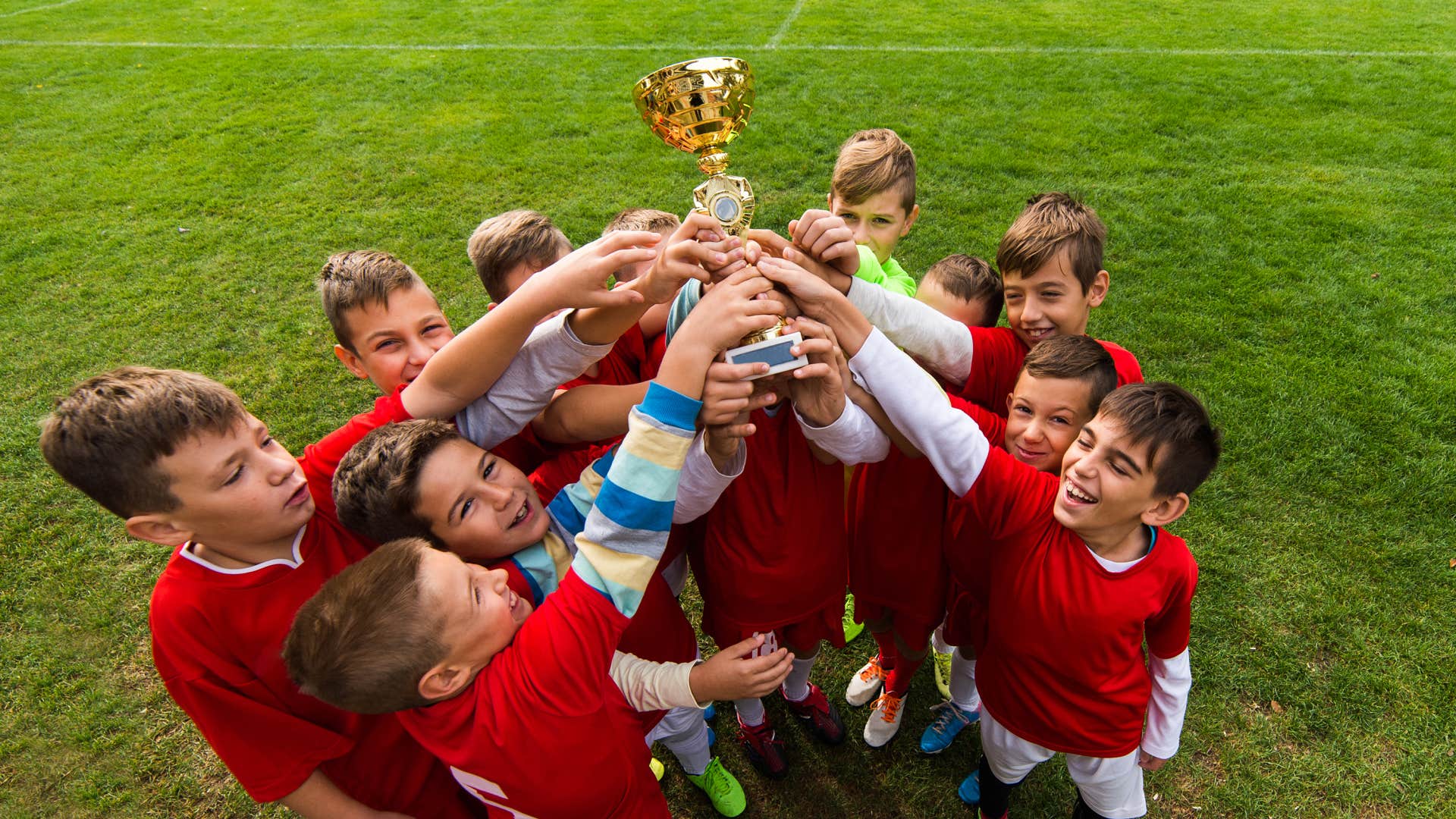
Many '80s kids tried to improve on their own upbringing by making sure their children didn't feel discouraged or left out, as many of them had once been. As a result, parents and teachers began rewarding kids simply for participating, hoping to inspire confidence and protect their self-esteem from an early age.
The self-esteem movement started with the best of intentions. Parents and educators wanted all children to feel special and worthy. That desire stemmed from the passion project of California state legislator John Vasconcellos, who concluded that since research showed low self-esteem was tied to maladaptive behaviors, raising children's self-esteem must have beneficial effects. Based on this assumption, he launched a task force that, over the next few decades, gave rise to what became a $10 billion-a-year industry.
As it turns out, the assumptions Vasconcellos made didn't fully hold true. Whereas he had believed increasing self-esteem would reduce crime, teen pregnancy, and a variety of other societal problems, Jesse Singal noted in The Cut that "in some areas, high self-esteem actually correlated with worse behavior; some criminals, it turns out, actually view themselves quite favorably."
In fact, one study published in the International Journal of Psychology and Educational Studies found that students rewarded simply for completing a task may do it for the reward rather than because they're genuinely interested in it. Over time, that can lower motivation once the reward disappears. The opposite of what parents originally hoped for.
4. They put pressure on kids to perform in school at younger ages
 Shutterstock / Olimpik
In trying to do better than their parents, many '80s kids put more pressure on their children to succeed in school at younger ages. During Ronald Reagan's presidency in 1983, the National Commission on Excellence in Education presented the Nation at Risk report, which claimed the education system was severely lacking and that other countries were taking the lead. It called on elected officials, educators, parents, and students to reform a public school system it described as being "in urgent need of improvement."
In response, the commission offered 38 recommendations, including more rigorous standards, higher expectations for student performance and conduct, raised admissions standards for institutions of higher education meant "to push students to do their best during their elementary and secondary years," as well as longer school days and a 200- to 220-day school year.
While some of these changes were positive, they also helped create a culture in which academic success began to feel urgent much earlier in childhood. As William Bennett, Reagan's second-term education secretary, later said, "If there's a bottom line, it's that we're spending twice as much money on education as we did in '83 and the results haven't changed all that much."
What has changed is students' stress levels. Surveys show academic pressure among kids of all ages has been steadily rising and shows no signs of easing, suggesting that, in trying to give their children a stronger start than they had, many parents have also made school feel more intense from an earlier age.
5. They made screens a normal part of childhood
 Pixel-Shot | Shutterstock
Hoping to give their children a better experience than they had, many '80s kids embraced screen-based entertainment as a normal part of childhood. With notable games like Super Mario Bros. making waves and the ability to play them at home becoming more affordable and popular, it's no surprise that many parents who grew up with these games themselves felt comfortable introducing them to their own kids at younger ages.
What started as harmless fun, however, has gradually become a much larger part of children's daily lives. As of 2023, Daniel Alanko, MD, notes that "90% of children older than 2 years play video games, and three-quarters of American households own a video game console." He also reports that children ages 8 to 17 spend an average of 1.5 to 2 hours each day playing video games.
Not only that, but the rise of video game use has contributed to a broader increase in overall screen time. The American Academy of Child & Adolescent Psychiatry (AACAP) reports that kids ages 8 to 12 now spend 4 to 6 hours a day on screens, while teens spend up to 9 hours daily. They warn that constant screen exposure can be linked to sleep problems, lower grades, reduced reading time, and mood and weight concerns when it becomes difficult for parents to limit screen use.
6. They bought more toys to attempt to create happier childhoods
 Shutterstock / Maria Symchych
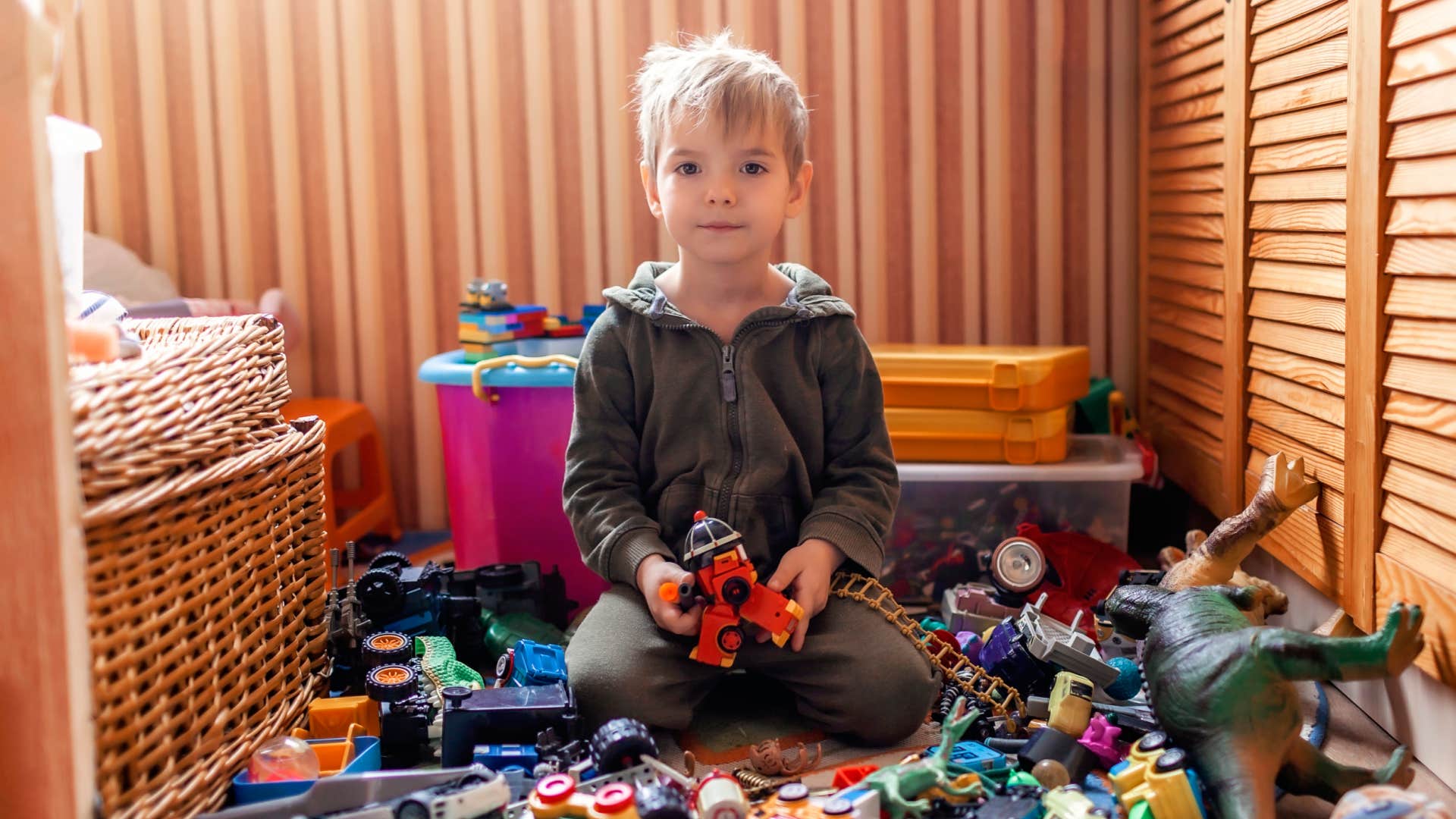
Determined to raise their kids differently, many '80s parents gave their children more toys than they had growing up. Sitting in front of the TV, many of them remembered the colorful ads that promised endless entertainment and joy, and it was easy to believe those toys could help create a happier childhood.
Back in the day, children often had fewer toys and spent more time engaging with the world around them. Picking up sticks, they were happy to "sword fight" with friends for hours on end, using imagination instead of constant stimulation.
Over time, however, parents began spending hundreds of dollars on advertised toys, hoping their kids would finally feel satisfied or entertained. But research shows that having fewer toys actually promotes more peaceful, deeper, and more meaningful play.
Though simple, giving kids space to rely on creativity and connect with nature and others often helps them develop the confidence and independence that earlier generations built naturally.
7. They became obsessed with keeping their kids safe
 DimaBerlin | Shutterstock
Wanting to avoid the mistakes they grew up with, many '80s kids focused much more heavily on safety. Before the 1980s, parents would load their kids in the car and go for a ride without giving a second thought to seat belts. By 1985, all 50 states had enacted laws requiring them, and shortly after that, states and localities began passing laws requiring kids to wear safety helmets while riding bicycles.
Both of these safety measures have saved a tremendous number of lives. An unintended consequence, however, was the growing belief among parents that they could and should "bubble wrap" their kids and protect them from anything that might harm them.
Doing this can deny children what researchers call the "dignity of risk." As occupational therapy researcher Anita Bundy explains, "When we perpetually do things for others that they are fully capable of doing for themselves, or continually say, 'You can't,' we give the message, 'You are not capable.' Sooner or later, those individuals believe us."
8. They became more concerned about their children's weight and health
 Prostock-studio | Shutterstock
Looking back on their own childhoods, many '80s kids decided to pay closer attention to their children's weight and health. The 1980s saw the launch of a major fitness and nutrition craze, which followed the identification of what became known as the obesity epidemic: the sharp rise in obesity rates among Americans of all ages.
As awareness increased, so did concern among parents who wanted their children to avoid the long-term health risks they were hearing more about. At the same time, heightened attention to weight also increased peer pressure on overweight kids and teens. One study conducted in 1980 found that when an obese teen girl could offer an acceptable explanation for her size, she was still less liked and given a less positive evaluation than her peers.
Multiple researchers now argue that "by exaggerating the risks of fat and the feasibility of weight loss … the Centers for Disease Control and Prevention, the U.S. Department of Health and Human Services and the World Health Organization inadvertently perpetuate stigma, encourage unbalanced diets and, perhaps, even exacerbate weight gain." In trying to protect their children's health, many parents may have unintentionally increased the pressure kids felt about their bodies.
9. They started supervising and digitally monitoring their kids
 pikselstock | Shutterstock
Many parents who grew up in the 1980s remember being left to figure things out on their own for long stretches of time. They rode bikes without phones, stayed out until the streetlights came on, and often had very little direct contact with adults once they left the house. So when they became parents, it made sense that they wanted to stay more connected to their own kids.
Technology made that possible in ways earlier generations never imagined. Location-sharing apps, smartwatches, and constant texting gave parents real-time updates on where their children were and what they were doing. What started as reassurance quickly became an expectation and requirement.
Over time, though, that level of monitoring changed how independence develops. Instead of learning how to problem-solve without backup, many kids grew up knowing help was always just a message away. That safety net can be comforting, but it can also delay confidence in handling situations on their own.
Researchers have increasingly pointed out that independence grows through taking small risks and making unsupervised decisions. When children are constantly tracked or checked in on, they may have fewer opportunities to build a sense of capability in themselves.
Ironically, the goal was to make kids feel safer and more supported than their parents did growing up. But in some cases, constant digital supervision made childhood feel more watched than free.
10. They stepped in too quickly to fix their kids' problems
 JLco Julia Amaral | Shutterstock
Many people raised in the 1980s remember handling challenges without much adult involvement. Whether it was dealing with school issues, friendships, or neighborhood conflicts, they were often expected to figure things out on their own. As adults, they didn't want their children to feel that same lack of support.
So they stepped in earlier and more often. Parents began emailing teachers, negotiating social conflicts, and smoothing out obstacles before their kids even had the chance to try to handle things themselves. The intention was protection, not control.
Psychologists often describe this as "helicopter parenting," a style built around close involvement and quick intervention. While it can come from care and attentiveness, it sometimes prevents kids from developing resilience through trial and error.
When adults solve problems too quickly, children may start to doubt their ability to handle setbacks independently. Over time, that can make normal challenges feel bigger and more stressful than they actually are.
Parents who grew up with less guidance were trying to make childhood easier than it was for them. But stepping in too often sometimes made it harder for kids to build the confidence that earlier generations developed naturally.
Marielisa Reyes is a writer with a bachelor's degree in psychology who covers self-help, relationships, careers, family, and astrology topics.

