
If Your Husband Grew Up In A Home Where Men Couldn't Be Trusted, You Probably Hear These 11 Phrases All The Time
 Galina Zhigalova / Shutterstock
Our childhood plays a serious role in how we act as adults. Unfortunately, some people grow up in unhealthy home environments. Complicated family dynamics can shape who we become. If a man acts a certain way, it may be because of the situation he endured at home.
Some men grew up in homes where they could get away with anything. That isn’t always the case. Other men came of age in homes where men couldn’t be trusted. Often, their family members experienced a situation that changed the way they viewed men. Whether it was heartbreak or more serious issues, if men were viewed as untrustworthy, it would affect everyone in the household. As a result, a husband may act a certain way toward his wife, saying specific phrases.
If your husband grew up in a home where men couldn't be trusted, you probably hear these 11 phrases all the time
1. ‘I’m sorry’
 Motortion from Getty Images via Canva
If you’ve been around anyone who was made to feel like a burden, you’ll notice that they apologize a lot. It may be because they feel they are always an inconvenience to the people in their lives. If a man grew up in a home where men weren’t trusted, he likely felt under a microscope. Without trust, he may have been punished often. With harsh discipline, children may be more at risk for mental health issues. If he grew up with these consequences, he may feel he has to apologize for everything.
Sometimes, people feel like they have to apologize before they are told their behavior upset someone else. If your husband is constantly saying he is sorry, it may be a defense mechanism he picked up in childhood. If he never felt trusted, he likely apologized to his caregivers often. He may do the same in his marriage.
2. ‘I can do it myself’
 pixelshot via Canva
It isn’t easy to grow up in a home where you are instantly not trusted, even if you didn’t do anything to justify that behavior. Sometimes, past experiences with men can change how family members, such as caretakers and siblings, see someone. Although they may have been innocent, they likely had less help than the average child. Instead, taking care of themselves might have become the norm.
Sometimes, a response to this can lead to hyper-independence. They may not reach out for help because they didn’t have much experience with it as a child. Now, they take care of everything for themselves. You may hear ‘I can do it myself’ from your husband often.
3. ‘I don’t need anyone else’
 DragonImages via Canva
Growing up in a home where men couldn’t be trusted, your husband may have felt abandoned. Instead of being loved unconditionally, it could have felt like everything was a test he would either pass or fail. If that were the case, he may have a hard time relying on others. He could instead take on everything on his own. He may claim he doesn’t need anyone, but in reality, he does.
In reality, he may need people more than he admits. It could be that he wants an emotional connection, but he is afraid of being hurt. It’s sad and may take a lot of work between you as a couple to get through.
4. ‘What can I do to make you trust me?’
 SolStock from Getty Images Signature via Canva
Trust isn’t easy. Sometimes, it takes a lot to be shown that you can trust someone. Growing up in a home where men couldn’t be trusted, your husband may feel like he has to prove himself to you every day. You may hear him asking, ‘What can I do to make you trust me?’ even if you have no issues trusting him at all. It may be hard for him to understand that another person can trust him.
If they are fearful of earning your trust, they may not want to enter a relationship at all. Instead, they might avoid commitment. Since you’re now married, he may have broken through that barrier, but if he still asks how he can earn your trust, it’s a sign he’s still struggling with it.
5. ‘I’ll give you space’
 dimaberlinphotos via Canva
Growing up in a space that didn’t feel safe for them, they likely learned to keep their distance. Instead of having a close connection with his family, he may have backed off. Giving space instead of being close by may be a response to the pain he felt growing up. He may back off when he starts to feel too close. Or, it may be natural for him to take the backseat. Instead of being overbearing, he might want to step back and let you do what you need.
By saying ‘I’ll give you space,’ he may be hoping not to smother you. It’s not an easy thing to hear from someone, especially when you want them close. He may not understand how much you care about him because of his childhood.
6. ‘I don’t want to be a burden'
 Klaus Nielsen from Pexels via Canva
When something causes us pain, it may be a gut reaction to shut down. Instead of opening up about what’s going on in our heads, it’s easier to keep our feelings to ourselves. Even if we feel safe with someone, it can be hard to open up. For men, this can be especially difficult. It takes vulnerability.
“Although building walls creates a safe space into which you can quickly retreat, it also blocks the flow of energy and love. It's easy to become trapped behind your own emotional defenses, unable to give or receive positive emotions as well as negative ones. This leaves many people feeling isolated and alone,” says Lisa Fritscher.
7. ‘I’ve got it under control’
 Aflo Images from アフロ(Aflo)via Canva
Asking for help can be difficult. Even if you have a healthy relationship, it can be hard to ask for the support you need. Sometimes, it can make us feel weak. For men, this is especially true. Since they are more likely to struggle with their emotions from growing up with unhealthy stereotypes that show their feelings make them less-than.
Instead of asking for help, your husband may say things like ‘I’ve got it under control.’ He may not have had the support in his childhood. If he wasn’t getting help at home, he may not ask for it with you. He may take on more than he’s comfortable handling because of his past experiences.
8. ‘I don’t want to bother you’
 Timur Weber from Pexels via Canva
When a man grew up in a home where men couldn’t be trusted, he may have felt uncomfortable in his own space. Instead of being part of the family, he may have felt different. Since his family members were likely projecting their own problems onto him, he may have assumed he was a burden. It’s not easy to change that mindset. It may stick with him even through adulthood.
If you hear your husband say, ‘I don’t want to bother you,’ he may have said that often as a child. Instead of having confidence in his relationship, he may need validation to feel comfortable connecting with his partner on certain things.
9. ‘I don’t want to talk about it’
 Alex Green from Pexels via Canva
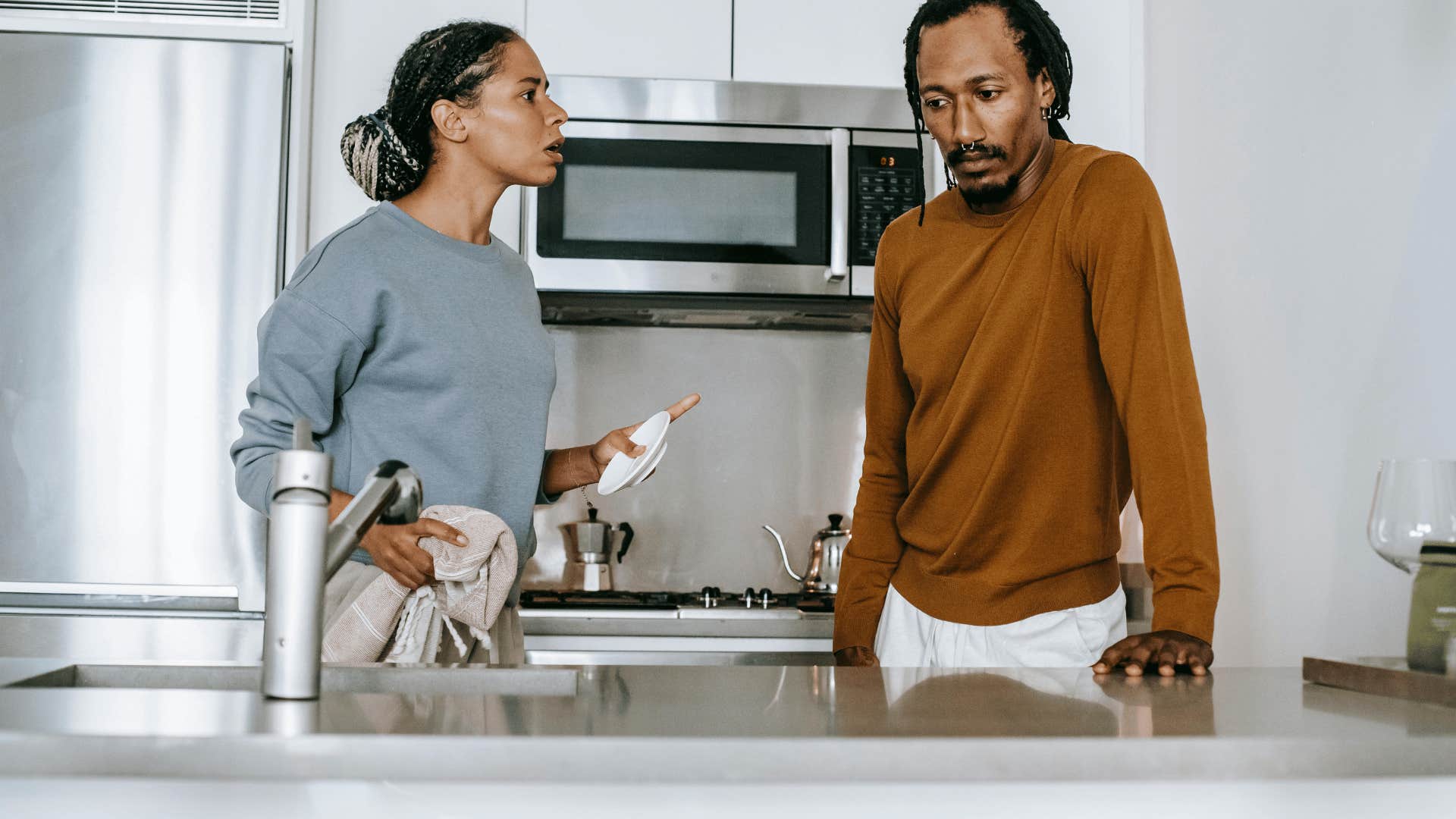
If your husband grew up feeling he couldn’t be trusted, he may shy away from having hard conversations. His childhood home may not have been a safe space to talk about hard things. Instead, he might keep things bottled up. It’s hard to feel like you are always the problem, even if you didn’t do something wrong. Even if he knows he is safe with you, it can still be hard for him to open up.
He may say things like, ‘I don’t want to talk about it’ when hard topics come up. This can be hard on a relationship. Both people need to be open. If this goes back to his childhood, it may be even more difficult for him to work through things. Sometimes, it takes serious work and preparation to get past this issue.
10. ‘I’m fine’
 SashaFoxWalters from Getty Images Signature via Canva
We’ve all said we were fine when we weren’t. Often, women have been stereotyped for doing this. However, men can be on the other side of this as well. Growing up in a home where men were not trusted, he likely had to play off how he was feeling. He may not have been able to talk to his caretakers about his problems. Now, he’ll say ‘I’m fine’ even when something serious is brewing under the surface.
“Pretending that we don't have any problems, difficult emotions, or conflicts is a facade. It's the image we want to present to the rest of the world. We want others to think everything is working out great for us because we are afraid of the shame, embarrassment, and judgment that might come if people knew the truth (that we were struggling, our lives are unmanageable, our loved ones are troubled, that we’re not perfect, etc.),” says Sharon Martin, LCSW.
11. ‘I don’t want to argue’
 Theparm from Getty Images via Canva
Arguments can bring forward feelings from our past. If you grew up in a toxic household, you may have been around a lot of arguing. A man who grew up in a home where men couldn’t be trusted likely experienced this. Instead of fighting, he may want to solve problems in a healthier, more productive fashion. However, having this attitude can make it difficult to work through things. Instead, he may push things under the rug because it’s easier than having a confrontation.
He may fear conflict. When he feels things are getting heated, he may shut down. He’ll say he doesn’t want to argue to avoid these issues.
Haley Van Horn is a freelance writer with a master’s degree in Humanities, living in Los Angeles. Her focus includes entertainment and lifestyle stories.

