
Man With Alzheimer’s Who Couldn’t Speak Suddenly Finds His Words When His Dog Walks In
 Jevtic | Canva
Lisa Abeyta posted a video that is a must-watch. Abeyta's father suffers from Alzheimer's disease, the most common form of dementia, which in his case has robbed him of most of his speech. But when presented with the dog he so loves, a small miracle occurs.
A man with Alzheimer's who couldn't speak suddenly finds his words when his dog walks in.
One of the cruelest things about Alzheimer's disease is the way it takes language away.
Researchers explain that what is happening is that the disease changes the brain's temporal lobe over a period of time, eventually reducing a person's ability to find words or follow a conversation, until speech disappears completely. For families caring for someone with Alzheimer's, the silence can be one of the hardest things to navigate.
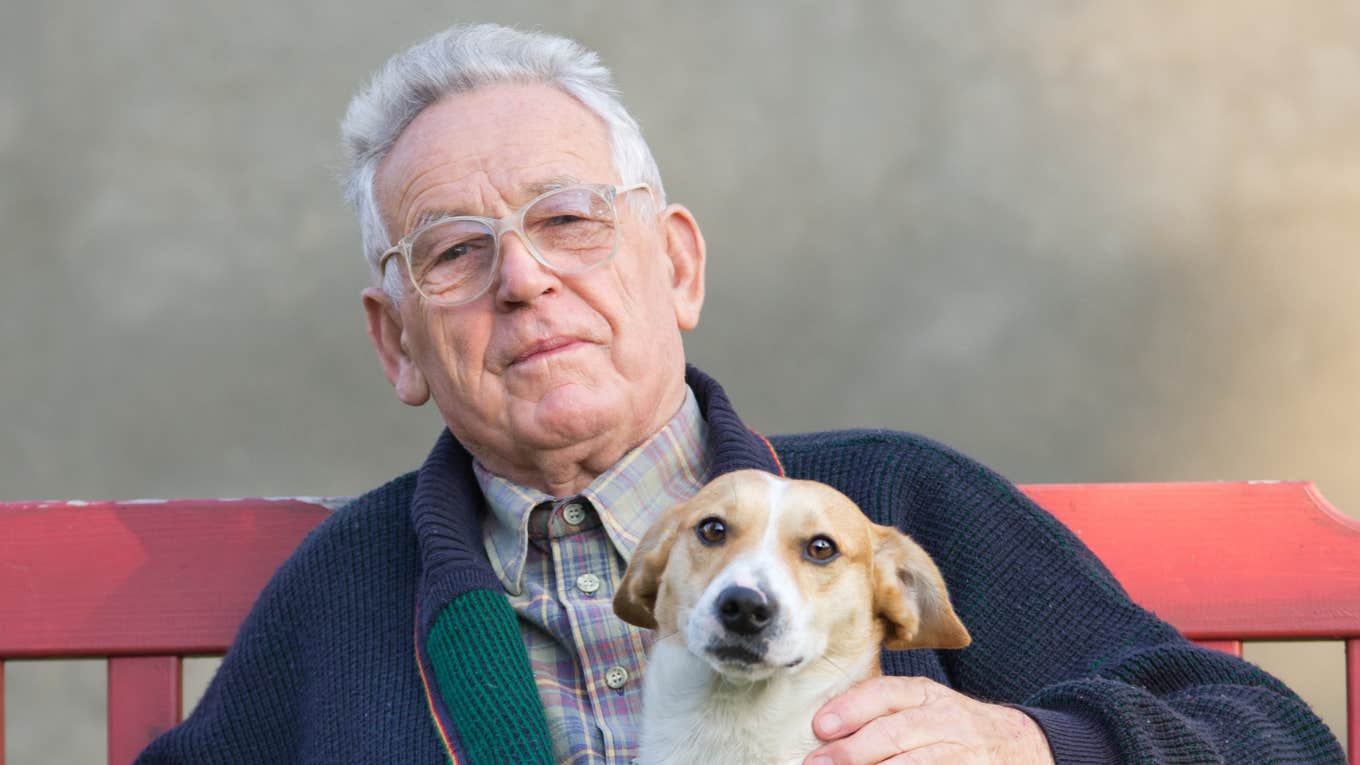
Abeyta's father, Charles Sasser, a Korean War veteran, had been living with Alzheimer's for several years when Lisa shared the video. In the months leading up to the video, her father had mostly lost his ability to speak. Then the family dog, Roscoe, walked in.
Her father started to speak to Roscoe with a clarity that stunned her. He spoke in complete sentences as if the part of him that knew how to connect to another living thing had never left at all. "I was surprised by his clarity and the ability to get out a complete sentence," Abeyta told ABC News.
What happened in Lisa's video is called episodes of lucidity.
 Getty Images / Unsplash+
Scientists who study animal-assisted therapy in dementia care describe these episodes as moments when a patient who is non-verbal becomes engaged, expressive, and present.
Research from Sweden found that Alzheimer's patients who spent time with trained therapy dogs spoke in full sentences, talking about memories and feelings while in the dog's presence in ways they could not manage in everyday interactions.
Part of what makes dogs so powerful in these moments is that this bond lives in a different part of the brain than language does.
It is rooted in emotion and long-term memory, which both tend to hold on longer in Alzheimer's patients than the ability to recall what happened five minutes ago.
A dog does not need you to remember its name or follow a conversation. It just shows up and asks for nothing except to be near you. For someone whose words have been slipping away, that kind of no-pressure connection can mean more than anyone on the outside looking in might expect.
Petting a dog, hearing it breathe, and feeling the weight of it against you are all experiences that can reach parts of the brain that verbal communication can't anymore. Even with patients who had stopped engaging with family members for several years, the presence of a dog could open something.
For Abeyta, the video was a tribute to her mother, who takes on the daily care for her father on her own. "The true hero is my mom. This is her life's work," Abeyta said. "I shared the video, but my mom is the one who takes care of him by herself, and I can't give her enough credit."
This quiet recognition hit just as hard in people's hearts as the video itself. For every person living with Alzheimer's, there is usually someone else whose entire world has reorganized around keeping them safe, comfortable, and loved.
But sometimes a dog walks in. And for just a little while, the person you have been missing comes back to you with something to say.
Kristen Droesch is a writer, editor, and librarian who writes about love and relationships.

