
People Who Truly Love Themselves In Midlife Tend To Let Go Of These 5 Insecurities
 mapodile | Canva
Loving yourself in midlife doesn't happen all at once; it's something you grow into, often after years of second-guessing yourself, people-pleasing, or carrying around insecurities you didn't even realize were shaping your life. Research suggests that learning to truly love yourself is one of the hardest things to do, but people who truly love themselves in midlife have learned to stop letting certain insecurities control how they think and feel.
Instead of chasing approval or avoiding discomfort, they start to trust themselves, speak honestly, and let go of the habits that once held them back. Here are the insecurities people who truly love themselves in midlife tend to leave behind.
People who truly love themselves in midlife tend to let go of these 5 insecurities:
1. The need to suppress or avoid their emotions
 Miljan Zivkovic via Shutterstock
Recall a time when you felt anger, sadness, or anxiety. You probably felt it in your throat, chest, heart, or stomach — this is the core of your body. A study helped show how you can self-reference by focusing your attention on your core so you can connect with the felt sense of your authentic emotions and bodily sensations.
We often say we have a heavy heart, a gut feeling, or butterflies in our stomach. When you slow down and really let yourself feel what’s going on inside, you start to reconnect with who you actually are. Now, you can clearly express your genuine thoughts, feelings, needs, and values.
2. The fear of outgrowing old attachment patterns
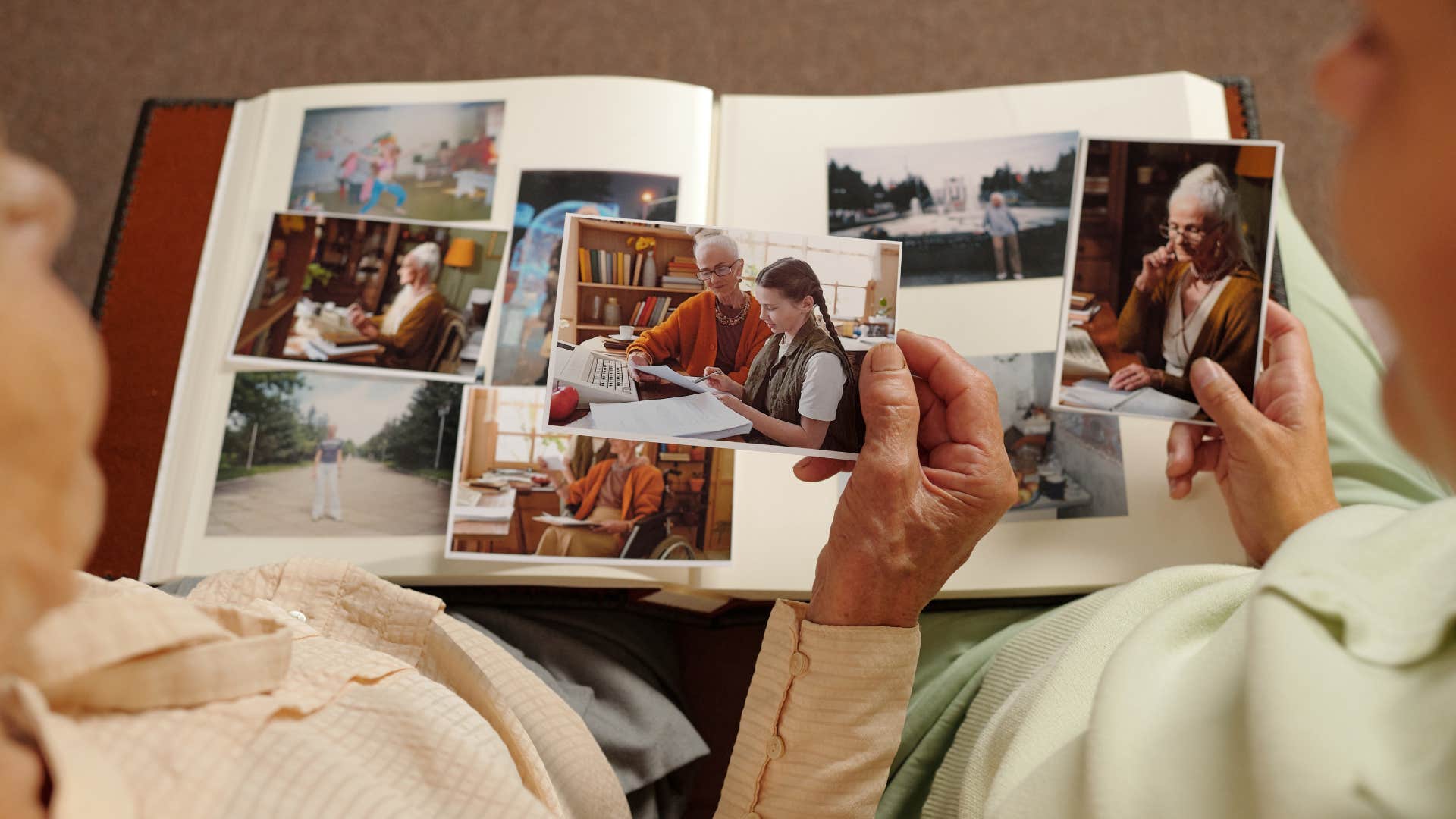 AnnaStills via Shutterstock
What are your attachment patterns that are part of your survival self? By knowing and naming them, you can become less identified with them. What are the frequent compulsions, obsessions, and addictions that your survival self uses in life?
Start noticing when the coping strategies that once protected you are no longer helping and are actually holding you back. Confront your attachment patterns, survival strategies, and coping mechanisms, and substitute them with mindful choices. Now, you have agency.
3. The habit of believing every negative thought
 Jacob Lund via Shutterstock
Some inner negativity is inevitable. One study suggests that personal growth starts when you learn to notice your inner critic without automatically believing everything it says. Don't identify with its shaming, blaming criticism. You can observe the thoughts in your mind without judging or considering them.
Use your inner witness to control your brain and stop your heavy thoughts from continually looping in your mind. This eventually improves your self-worth and helps you rise from depression. Being present in the moment allows you to reconnect with yourself and stay grounded in reality.
4. The instinct to avoid discomfort and play it safe
 pixelheadphoto digitalskillet via Shutterstock
Talk to yourself as you would a good friend. Don't avoid, withdraw, or hide when you're fearful. Take action and approach life so you can build authentic confidence and healthy self-esteem. Approaching instead of avoiding heals anxiety.
Mistakes, failures, and rejections are inevitable in life; they do not mean you are not worthy of love and success. Let yourself mess up and learn from it, without taking it as a sign that something's wrong with you.
5. The pressure to heal perfectly or on a timeline
 PeopleImages.com - Yuri A via Shutterstock
Remember what gives your life meaning and purpose, and be committed to that work. Research has found that purpose and meaning are sources of true happiness. These tools are only useful if you use them repeatedly. Healing is not linear. Yet, one of the incredible things about the human self is that it can change and grow.
When you learn to truly love yourself, you build the kind of inner stability that carries you through real life. You stop second-guessing who you are and start trusting it.
Dr. Nadine Macaluso, PhD, is a licensed psychotherapist, expert in trauma bonds and narcissistic abuse, and bestselling author.

