
The 'Permacession' Theory Suggests The Economy Isn't That Bad, But Everyone Is Too Unhappy To Notice
 Roman Samborskyi | Shutterstock
In a piece for The Atlantic, economics and politics journalist Annie Lowrey introduced the idea of a “permacession,” or a permanent recession in which Americans are convinced the economy is constantly on life support even when it’s not.
For a few years now, “vibecession” has been a buzzword. The term was coined by economic writer Kyla Scanlon to describe an economy that isn’t doing all that bad, but people still aren’t thrilled about it because they aren’t seeing improvements in their own lives. In other words, they’re getting bad vibes. The question is, do the facts really back that up?
The 'permacession' theory says Americans’ persistent pessimism has created an environment in which they can’t actually recognize how strong the economy is.
Lowrey has written about the “vibecession” extensively, but she feels like that isn’t the right descriptor to use anymore since “vibes are temporary.” Instead, she thinks that something deeper is going on that she can’t quite explain.
“Americans are expressing some of the deepest, broadest, and stubbornest economic pessimism ever recorded,” she wrote. “They’re doing so even though nearly every American who wants a job has one and the stock market is booming.”
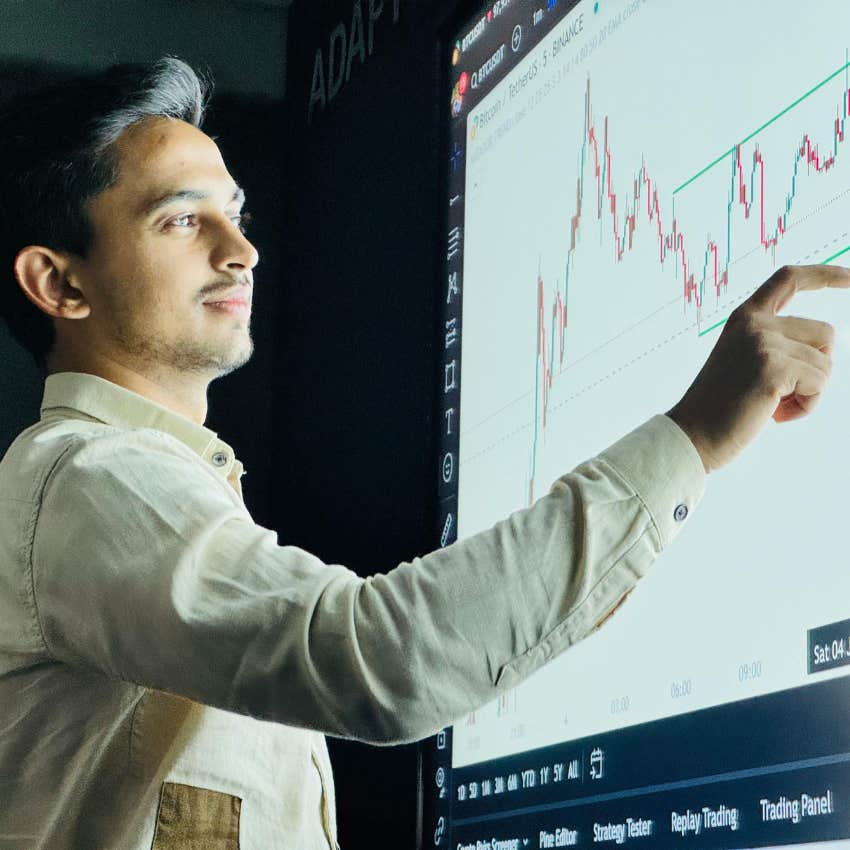 Kaushal Moradiya | Pexels
Technically, the stock market is doing pretty well right now. But, while employment statistics might not look terrible, there’s plenty of anecdotal evidence that suggests people are struggling to find jobs. It’s particularly bad for recent graduates who are not only having a hard time landing entry-level positions, but even internships.
We’re all used to hearing various politicians, including President Trump, say that the economy is doing well. Perhaps the problem lies in the fact that the economy really does look good on paper when you’re solely focusing on numbers, but the average American isn’t experiencing that.
Given how bad the cost-of-living crisis is, it’s understandable that people don’t have much confidence in the economy right now.
You’ve probably heard someone call the economy K-shaped at this point, which is a somewhat strange name for a basic concept. The line on the “K” that points upward symbolizes the wealthiest Americans, who actually benefit from things like a strong stock market. The bottom line represents the less fortunate who are more worried about paying for groceries and rent than the GDP.
 Lucigerma | Shutterstock
Lowrey did admit that this income “inequality is perhaps the most fundamental” factor that keeps lower-income folks feeling like they can’t possibly catch up. This is surely not helped by the fact that we have billionaire businessmen shoved in our faces these days like they’re celebrities. She also mentioned that “the cost of essential services … has crept up faster than the overall pace of inflation.”
Many economic experts believe this is what’s really worrying Americans. Numbers simply don’t mean that much when they’re living paycheck to paycheck and can barely afford the things they need to survive. The fact that the current administration made a lot of promises about making life more affordable for average people that it has yet to deliver on doesn’t help either.
The concept of a ‘permacession’ might not be completely off-base, but it does feel a bit out of touch.
Lowrey knew she would face backlash after sharing what she called “an unpopular and perhaps even offensive truth,” and she wasn’t wrong. One Reddit commenter shared, “I think that not being able to buy a house and start a family is heartbreaking for most younger Americans and Ms. Lowrey doesn’t give that the importance it deserves in her analysis.”
 Oakland Images | Shutterstock
Another stated much more bluntly, “This is a terrible article. I was surprised The Atlantic went with it.”
Honestly, what Lowrey said isn’t false from a logical standpoint. However, when most people don’t know how they’re going to pay for their next tank of gas or medical appointment, nice numbers don’t matter. People are looking for relief, and they shouldn’t be made to feel like that’s unreasonable because data doesn’t reflect their lived experience.
Mary-Faith Martinez is a writer with a bachelor’s degree in English and Journalism who covers news, psychology, lifestyle, and human interest topics.

