
12 Lessons Even Smart Women Often Learn Too Late In Life
 alexaSH | Shutterstock
 The pressure put on women by society is immense. We are expected to be attractive, compelling, intelligent, and high-achieving. We need to fill our wallets, so to speak, while being maternal and natural caretakers. Somehow, we need to find a way to avoid burning out while doing all of this. It can feel impossible to meet all of these expectations, and questing to be perfect eventually backfires on most of us. That's probably why women over the age of 60 tend to be happier, they've learned a few key life lessons.
If women learned these lessons earlier in life, there's a chance we could take some of the unnecessary burden from our shoulders. We could stop working so hard to please others and focus on building a life that is rewarding, one where we could give back to others with our full selves because we aren't so drained from needing to please everyone else.
Here are 12 lessons most women learn too late in life
1. You don't have to tolerate disrespect
 Dragana Gordic | Shutterstock
We've all been disrespected or undermined, and in the moment we might feel like people are out to get us. And, sure, sometimes they are. There are definitely bad people out there! But a lot of times people are disrespectful because we haven't set high enough standards for how they should treat us.
A lesson younger women could benefit from is this: You set the limits and you set the boundaries. And if someone treats you with disrespect, you make it clear that you expect and deserve more. If they don't rise to that occasion, you step away from them. If you don't, they'll just keep disrespecting you down the road.
In fact, one study found that those who are disrespected often develop cynical views about human nature. This, in turn, appears to create (or at least allow) more disrespect from others.
The lesson? Set higher standards, cut disrespectful people from your life, and don't allow the few bad people out there to turn you into a cynic.
2. Attitude is everything
 Andrea Piacquadio | Pexels
Whether it's a bad morning or a raging headache, most of us struggle to keep a positive mindset. It's human to feel down sometimes and it's not healthy to pretend you're happy when you're not. But getting stuck in a negative mindset can cast a dark note over your whole life, if you let it.
Even smart women often learn far too late what a change in mindset can accomplish. For instance, multiple studies have shown that a change in mindset leads to greater motivation and academic success among students. According to an additional study, "Positive thinking and interventions can increase older adults' resilience, and thereby improve their quality of life. High quality of life can lead to greater life satisfaction."
So, even when it's hard, find things to be grateful for each and every day. Focus on the positives throughout your day and keep yourself in high spirits — your overall health depends on it.
3. Health is better than wealth
 Photoroyalty | Shutterstock
Don't underestimate the importance of good health. Good health means more than less trips to the doctor's office; staying on top of it has incredible benefits for your longevity and even your happiness.
Research has found that while, yes, eating healthy is linked to reduced cardiovascular disease and cancer, a healthy diet is also linked to mental health benefits. According to one study, "Several nutritional deficiencies, such as vitamin B12, B9 (folate), and zinc, can cause symptoms of depression and dementia such as low mood, fatigue, cognitive decline, and irritability."
So focus on a healthy diet as much as you can. You don't have to go overboard in order to see the benefits to your health, both mental and physiological. Unfortunately, many women learn this lesson a bit too late. But there's always some time to turn things around for the better.
4. Actions speak louder than words
 New Africa | Shutterstock
Anyone can say they'll be there for you or promise you the world, but only a rare and special few will actually show up when you need them. That's why women who've learned key lessons watch for actions, not just words.
According to licensed counselor Lee Wichman, "The unconscious is incredibly powerful and one's behaviors cannot help but betray one's true sentiments." Smart women know to look at those behaviors.
That doesn't mean you leave a friendship or relationship if someone lets you down, but women who have learned these lessons don't wait around for those who don't show up more than a few times. They move them further outside of the friendship circle or set boundaries in romantic relationships based on clear, reasonable expectations that actions and words will match.
It's a tough pill to swallow for most, but it's important to truly understand the meaning of that phrase and to look deeper than just the cliché. Because if we don't, we might find ourselves in relationships that drain us instead of inspire us.
5. It's okay to say 'no'
 fizkes | Shutterstock
Never feel bad about saying no or having boundaries. Boundaries are an important part of living a good, authentic life. But the unfortunate truth is that most women don't learn this lesson soon enough.
According to a survey, 65% of women (compared to 49% of men) admitted to having a hard time saying no. Many people have even lied to get out of attending an event, with the top excuse being illness. And 57% pretended to be sick, with 62% of women admitting to using that as an excuse instead of telling the truth.
But why do we do this? Why can't we just say no and set those boundaries? The same survey found that 63% of Americans consider themselves people-pleasers. And people-pleasing can lead us to abandon our comfort and values just for the sake of others.
Over time, this can have devastating consequences on our overall well-being, making it harder for us to live a good life, which is why older women tend to be happier setting those boundaries and saying "no" politely. Fortunately, we can start practicing that now and spend more time in that blissful state.
6. Validation comes from within
 fizkes | Shutterstock
When we spend all of our lives looking for validation from others, we inevitably become dependent upon someone else to feel OK about ourselves. Worse, it creates a situation where all one can think about is finding more validation and approval.
That dependency often tempts us to keep people around in order to fill that need, even if they're not good for us. Sometimes they're simply not a good match for us. Other times they're objectively unhealthy or even cruel, but we refuse to cut them off because their validation matters too much.
Just remember, you can break these patterns. Relying on external validation is a habit, just like biting your nails (though a bit more deep-seeded!) and research indicates that even behaviors that are deeply-embedded can be changed. Research indicates that the best way to grow is to stop saying, "this is just how I am" and start saying, "I can do better than this."
7. It's OK to put yourself first without feeling bad
 Marcus Aurelius | Pexels
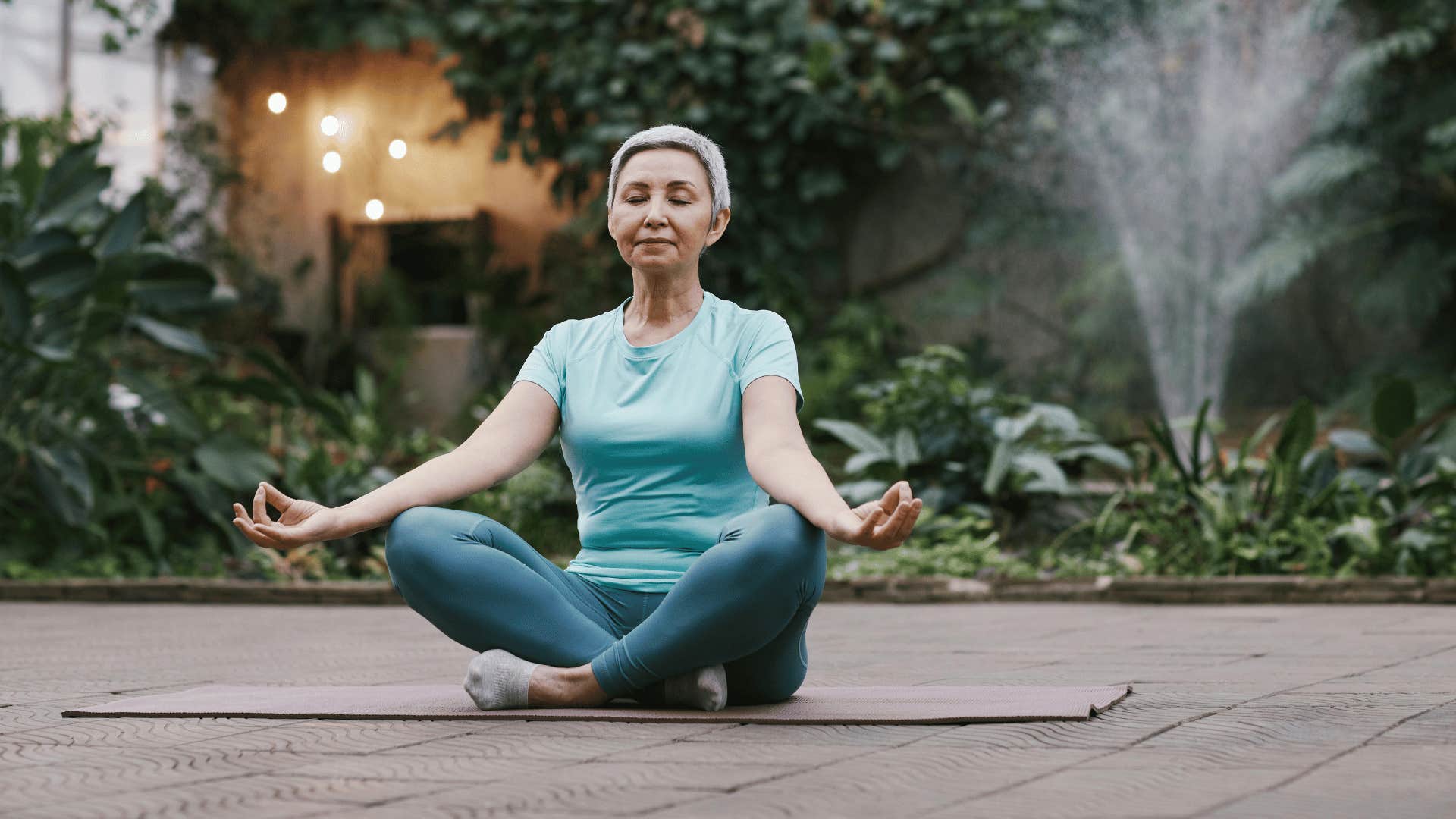
People might think you're selfish for putting yourself first, but making time for yourself is the best way to invest in the people you love. After all, you can't be your best self or show up for others when you're barely showing up for yourself.
Many people use the analogy of the adult and child on an airplane experiencing turbulence: As the flight attendants say in their pre-flight announcements, you must put your oxygen mask on first, before assisting your child. It makes sense when it comes to oxygen, but in real life, that can be very hard. Sneaking out to an exercise or art class, planning a night away from your family, or taking a week off of work as needed might make you feel really bad.
At first, that feeling of guilt might make you think that me-time isn't worth it, especially if you are a mom. But a massive meta-analysis of data surrounding parenthood and mental health showed that, "self-reported mental health was found to have significantly declined for female parents" over the 8-year period they studied. This is serious, as a 2025 report outlined that parental mental health struggles contribute to poorer outcomes for their kids throughout life.
Even if you're not a mother, you will likely feel the societal pressure to sacrifice yourself for the good of others. But you can still be a good friend, wife, mother, employee or entrepreneur (or anything else!) while taking good care of yourself.
8. Failure brings you one step closer to success
 insta_photos | Shutterstock
Just because you fail doesn't mean it's the end of the world. In fact, failure can bring you one step closer to success. But how you look at failure matters.
That doesn't mean disregarding our negative emotions. Rather, as Psychologist Dr. Barbara L. Fredrickson says, "People need negative emotions to move through difficult situations and respond to them appropriately in the short term."
If one is able to adopt a growth mindset, which psychologist Carol Dweck defines as "the ability to reframe perceived failures as opportunities to learn and grow when things go wrong," you're more likely to succeed. Not only are you less likely to give up, you're also more likely to gain knowledge and mastery through your trial-and-error process.
Like with anything in life, there's a need for balance. And learning from those lessons and not allowing failure to overwhelm is the way to go.
9. Relationships should fuel you, not diminish you
 PeopleImages.com - Yuri A | Shutterstock
Being in a relationship can be one of the most beautiful things a human can experience, but if you find yourself feeling angry, depressed, or unmotivated, it's a sign your relationship has stopped fueling you. Unfortunately, many women don't learn this lesson until they have already suffered through an emotionally draining relationship or friendship.
Healthy relationships are supposed to build you up, motivate and inspire you, not tear you down or dim your light. In fact, healthy and stable friendships are crucial to our overall well-being and life satisfaction, even impacting our health. Learn the hard lesson of picking your friends and partners wisely, before it's far too late.
10. You're in charge of your own success
 insta_photos | Shutterstock
Remember, only you can dictate your success, nobody else. And whether you choose to rise up or fall down is up to you and the decisions you make. But the good news is that we all have the ability to be successful, with a little bit of hard work.
The worst thing you can do for your career and other big life goals is to wait for someone else to deliver it. The women who are happiest in life have learned that lesson the hard way. Waiting for "magic" to get you where you want to be gives away your power.
While there's always a chance that your miracle will happen or your prince will ride in on a noble steed, you'll still want to know that you created your success. And, ultimately, you're much more likely to succeed based on your own work and motivation.
Does that mean you'll get it right the first time? Probably not. But knowing that you can accomplish anything if you put your mind to it can give you the strength to take charge of your own life and, by extension, your success.
11. Stay true to yourself, no matter what
 Rido | Shutterstock
Women who have lived and learned know that happiness requires you to always stay true to who you are, no matter what. That doesn't mean you refuse to grow or to take accountability for mistakes, it means including personal growth and accountability as part of who you are.
What you shouldn't do is change in order to fit in. Instead, become more and more yourself so that the people who will love you for who you are will be attracted to you.
Changing to fit in will only attract people who expect you to change — and the more you change, the less you'll be able to enjoy your success or accomplishments. Deep down you'll feel like something is missing, and that something that's missing will be your authentic self.
12. Your intuition is a powerful guide
 fizkes | Shutterstock
Trust yourself, even if you're not sure why. Most times, your intuition is right. That gut feeling is happening for a reason, and it's likely to protect you. This is a lesson learned by women later in life, but one that can be incredibly valuable to younger women, too.
"Daniel Kahneman, who won a Nobel prize in economics for his work on human judgment and decision-making, has proposed that we have two different thought systems," an article in Scientific American explains. "[S]ystem 1 is fast and intuitive; system 2 is slower and relies on reasoning."
Neuroscientist and psychologist Joel Pearson says that intuition should be used for predictable or familiar contexts, which can mean when you're making a business decision or when you're walking down a street. The combination of intuitive and reason-based decision-making is the most powerful of all.
The key nuance (and this is a tough one!) is telling the difference between your intuition trying to protect or guide you and old, unhealed wounds keeping you stuck.
The answer? Practice! Test your intuition, practice making choices with it at times when everything hangs in the balance. Over time, you'll learn the best combination of intuition and reasoning, and that's key to your success and your happiness.
Marielisa Reyes is a writer with a bachelor's in psychology who covers self-help, relationships, career, family, and astrology topics.

