
Women Who Grew Up With Undiagnosed ADHD Were Usually Called 11 Things By People In Their Lives
 syedfahadghazanfar / Shutterstock
Many women with ADHD struggle not only with their symptoms but with judgments from others for years, sometimes decades, before having access to a diagnosis and support.
While self-acceptance and emotional well-being both tend to thrive after being diagnosed, according to a study published in the Journal of Attention Disorders, many women have been called things and judged by the people in their lives since they were kids. They’ve grown up believing that they’re lazy, dramatic, and unmotivated, because nobody cared to acknowledge or address the symptoms of ADHD that they displayed. They assumed these women and girls’ struggles were self-induced, while, of course, jumping to help, diagnose, and justify the behaviors of their male counterparts.
Women who grew up with undiagnosed ADHD were usually called 11 things by people in their lives
1. Lazy
 Gladskikh Tatiana | Shutterstock.com
Struggles with productivity and attention, like overlooking social cues and engaging in impulsive social behaviors, are common for people with ADHD. As a study published in Nature Reviews Psychology explains, ADHD can also sometimes affect executive functioning, which can be misconstrued as laziness at some points in an ADHD person’s life.
They’re also prone to sensory overstimulation, which can be a barrier to productivity because it overloads the brain and sometimes leads to avoidant tendencies. So, women with ADHD aren’t inherently lazy. They’re just coping with and managing a lot more in their brains than the average person can fathom.
2. Dramatic or emotional
 Erik Gonzalez | Shutterstock.com
Having an over-responsiveness to sensory information and experiencing them more intensely is typical for people with ADHD, according to a study published in Frontiers in Integrative Neuroscience, in ways that often place people in a perpetual kind of fight or flight mode. They may have disproportionate reactions to stress or anger when something goes wrong because they’re overstimulated and dysregulated, trying to figure out how to cope.
Even having a deeply feeling mind can put people at a higher risk for overstimulation in daily life, so of course, women with ADHD often cope and feel things in much different ways than the average person. While it might seem like they’re being dramatic or overreacting, chances are they’re just operating from a much different emotional space.
Especially with all kinds of stigmas and stereotypes about women and emotional responses, of course, women were called something like this at one point in their lives. They weren’t understood. They were judged and belittled.
3. Uninterested or indifferent
 Gladskikh Tatiana | Shutterstock.com
Women with ADHD tend to display more inattentive symptoms, which are often less understood and easily overlooked compared to the hyperactive tendencies of their male counterparts. They sometimes zone out or daydream more often, trying to work up motivation or excitement about something, and, without knowledge of ADHD symptoms or a label, are labeled as uninterested or indifferent.
Spontaneous mind-wandering and intrusive thoughts that are often distracted are common symptoms for women with ADHD, according to a study published in the Frontiers in Psychiatry journal, and yet, they’re still misjudged by most people in society.
4. Entitled
 Vukasin Ljustina | Shutterstock.com
Some ADHD symptoms can mimic selfishness, like being prone to interrupting in conversations or needing more alone time to cope with overstimulation in public. Especially for women, who are often far more criticized for putting themselves first and advocating for their own needs, the label of entitled is something they’ve likely dealt with their entire lives.
However, they do need more care and intention to manage their dysregulated nervous systems. These needs might mimic selfishness to someone who can float by without extra effort, but women with ADHD need extra internal attention and strong boundaries. Despite what the world tells them, they deserve this extra care, even when it may seem selfish.
5. Impatient
 Pixel-Shot | Shutterstock.com
When a person with ADHD is understimulated, they may experience lapses in concentration, frustration, a lack of motivation, or boredom. Even if it’s in a conversation with someone else, they often come across and are labeled as impatient, even when they’re trying to garner attention toward someone or something.
They need meaning or purpose in their work or to be stimulated by their conversations, which can come across as impatience to someone trying to connect. They’re not selfishly impatient because they think they’re better than anyone else, but because their minds need a specific concoction of meaning and stimulation to stay attentive and engaged.
6. Unintelligent
 MAYA LAB | Shutterstock.com
Many women with ADHD are overlooked. Their symptoms aren’t met with support and care as children, which leads to all kinds of issues in adulthood that commonly attract judgment. Compared to the hyperactive traits young boys often express and receive help for early on, the inattentive trends in women with ADHD are missed.
Whether it’s teen pregnancy, low self-esteem, and underachievement as young adults, or financial strain, unemployment, and constant stress in adulthood, women with ADHD who never received the help or label they needed to cope are often judged for the symptoms and consequences now.
It was never their fault, but now, they’re pressured into believing that their misfortune stems from their laziness or a lack of ambition, when in reality, it stems from their self-prescribed coping mechanisms in a culture that ignored them.
7. Exhausting
 Bearfotos | Shutterstock.com
According to a study published in the Journal of Child Psychology and Psychiatry, women often deal with more societal burden and personal mental health struggles because of their experiences with ADHD, largely because it’s missed and misdiagnosed all the time. In fact, on average, women are diagnosed nearly five years later than men, if they’re diagnosed at all.
So, they’ve been forced to cope in their own ways with struggles around concentration or motivation that they never had the tools to face. They’ve been called “a handful” or “exhausting” for their entire lives, because they’ve been yearning for the help they needed all along.
They’ve been forced to deal with everything and manage all the burdens on their own. Of course, they’re going through a lot.
8. Spacey and distracted
 KinoMasterskaya | Shutterstock.com
Many women with undiagnosed ADHD struggled with a lot of things growing up, but mainly inattention and focus. They often had to do much more cognitive labor than others on simple tasks, meaning they spent a lot of time in their heads. While the average person might’ve considered them lazy or distracted, they were actually working through a million problems and barriers.
They were misrepresented and misunderstood. As a study published in the BMC Psychiatry journal explains, many women’s early life struggles have been replaced in adulthood with things like procrastination with chores and work, to feeling restless inside. Their experiences have changed, but unfortunately, for many women, others still find ways to mislabel them.
9. Too much
 Miljan Zivkovic | Shutterstock.com
In a society where women are pressured to be small and agreeable, especially to the men in their lives, it’s not surprising that those with ADHD and big, creative minds are labeled as “too much.” When they know what they need and put those needs first, they’re “selfish,” but if they don’t look out for themselves, nobody will.
They can either struggle in silence with ADHD symptoms nobody takes seriously, at the expense of their self-esteem and self-worth, or they can manage judgmental labels by protecting themselves.
10. Unreliable
 PreciousJ | Shutterstock.com
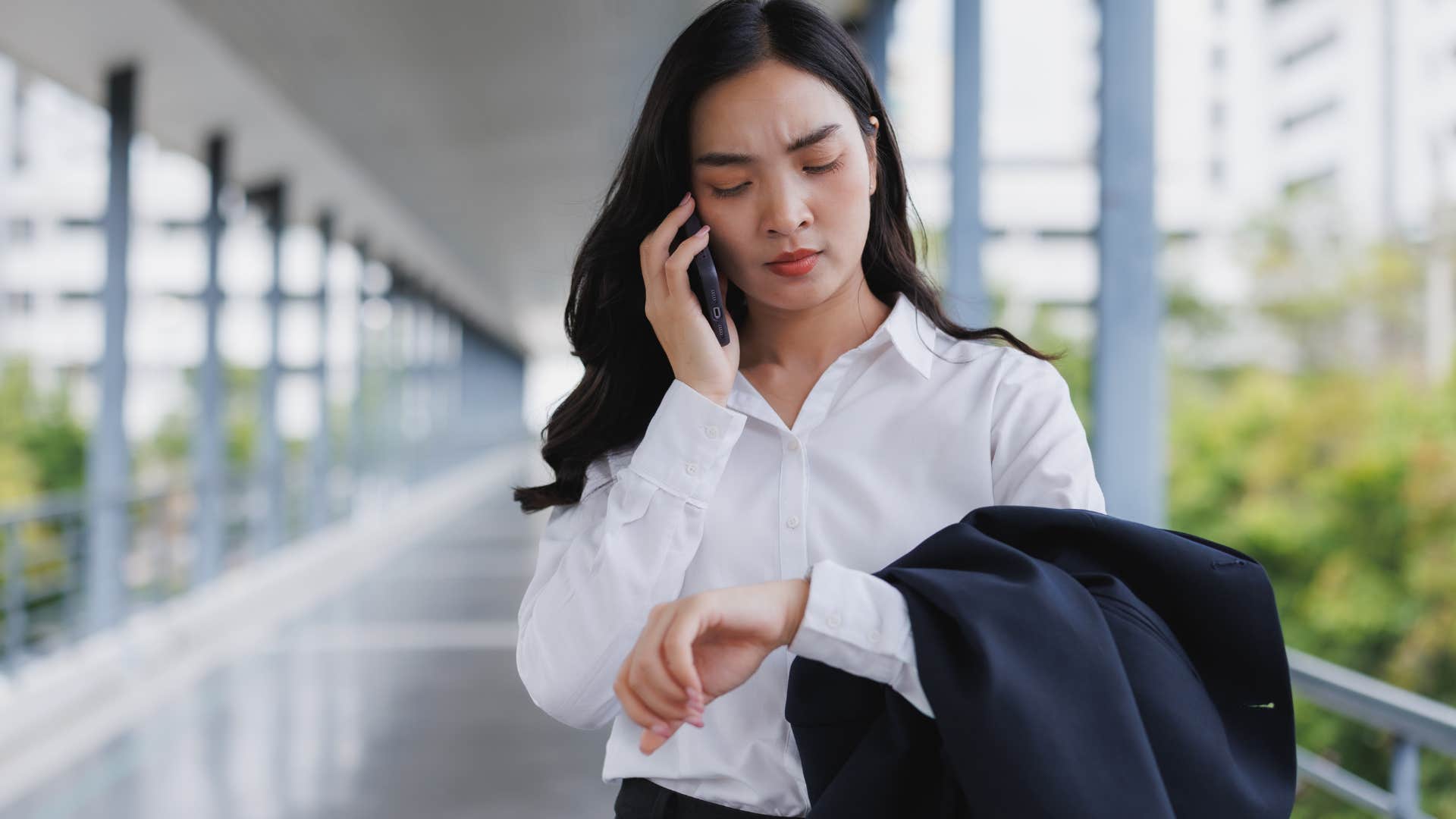
Many individuals with ADHD experience time blindness, where they struggle to quantify how much time has passed or underestimate how much time a specific task will take, at least according to a 2019 study. Usually, this means it takes a lot more effort for them to show up on time, causing all kinds of strain and stress in their relationships.
While it might feel like a woman with ADHD is unreliable at her core, disrespectful, or selfish, the truth is that most of the time, she can’t control her punctuality struggles. These behaviors aren’t rooted in maliciousness. They’re somewhat biological, which is why modern workplace accommodations have been put in place to prevent workers from being punished for something they can’t control.
11. Awkward
 VH-Studio | Shutterstock.com
Especially for young women, struggles with friendships, social interactions, and connections can be common when dealing with ADHD. These young women are often deemed shy and introverted, even if their struggles with social interactions actually stem from inner restlessness and cognitive chaos.
While some people have challenged these labels after seeking help and support for their ADHD, many women today are still living with these labels secured in their identity. They hold themselves to introverted tendencies and cling to their “shy” identity, even if it’s not actually doing them any favors.
Zayda Slabbekoorn is a senior editorial strategist with a bachelor’s degree in social relations & policy and gender studies who focuses on psychology, relationships, self-help, and human interest stories.

