
If You Grew Up As The Youngest Child In Your Family, You Probably Still Do These 11 Things As An Adult
 Cookie Studio | Shutterstock
It's a long-held belief that the youngest child of the family seems to be the most spoiled of all the siblings, and they do tend to develop habits that they carry into adulthood. They're the siblings who get away with a lot, are doted on by family members, and have older siblings to look to for guidance. But if you grew up as the youngest child in your family, you probably still do certain things as an adult that are a result of your upbringing.
While some may believe that the baby of the family gets better treatment, it's actually not too far off. As a study published in the Economic Journal revealed, parents do, indeed, punish their older children more harshly than they do their youngest. So, it only stands to reason that birth order directly impacts children's personalities, and that habits they develop as kids follow them into their grown up lives.
If you grew up as the youngest child in your family, you probably still do these 11 things as an adult
1. You learn best by being mentored
 PeopleImages | Shutterstock
Growing up, the youngest sibling is often their parents' favorite. At least, that's what the youngest children tend to think. According to the American National Family Life Survey, youngest siblings are most likely to believe they are their parent's favorite child, especially when then that child is male.
If you grew up as the youngest child in your family, it's likely that you often felt favored or that your parents tended to pay more attention to you. Additionally, you learned a great deal from your older siblings, allowing you to learn from everyone in your family. As an adult, you truly enjoy being mentored because it teaches you a lot about yourself and the world around you.
2. You're creative
 Worawee Meepian | Shutterstock
A study from CareerBuilder determined that younger siblings are more likely to be attracted to creative jobs. Additionally, seminal research from psychologist Frank J. Sulloway found that younger children in the birth order of their family score higher on measures "that tap imagination."
Considering the innate need youngest siblings have to distinguish themselves from their older siblings, it makes sense that their creativity shines brighter than that of their older brothers or sisters. Craving some form of independence, they're drawn to professions or actions that are often considered out of the box.
3. You tend to break the rules
 PeopleImages | Shutterstock
With less overbearing parents than their siblings had, it's tempting for the youngest siblings to want to see how much they can get away with. Many want to be different from their older siblings and will do everything in their power to push boundaries. These rebels will stay up late into the night and refuse to follow the same path as their siblings because they see that as boring and unoriginal.
Sulloway also noted that younger siblings "were more likely than firstborns to engage in rebellious activities." So, this explains why younger siblings might not be as religious or might not follow a traditional career path. They hate rules and disregard society's expectations, and are, by and large, considered rule-breakers.
4. You prefer hanging out with older people
 Ground Picture | Shutterstock
Even as adults, the youngest children has a preference for hanging out with older people. Although younger siblings may resent being compared to their older siblings, that doesn't mean they don't greatly admire or respect them.
In fact, according to a study published in the Journal of Family Theory & Review, older siblings, in addition to parents, play a significant role in shaping attachment styles and preferences. As a result, when they become adults, the youngest child in a family often feels comfortable in the presence of people who are much older than them.
5. You have great communication skills
 Dikushin Dmitry | Shutterstock
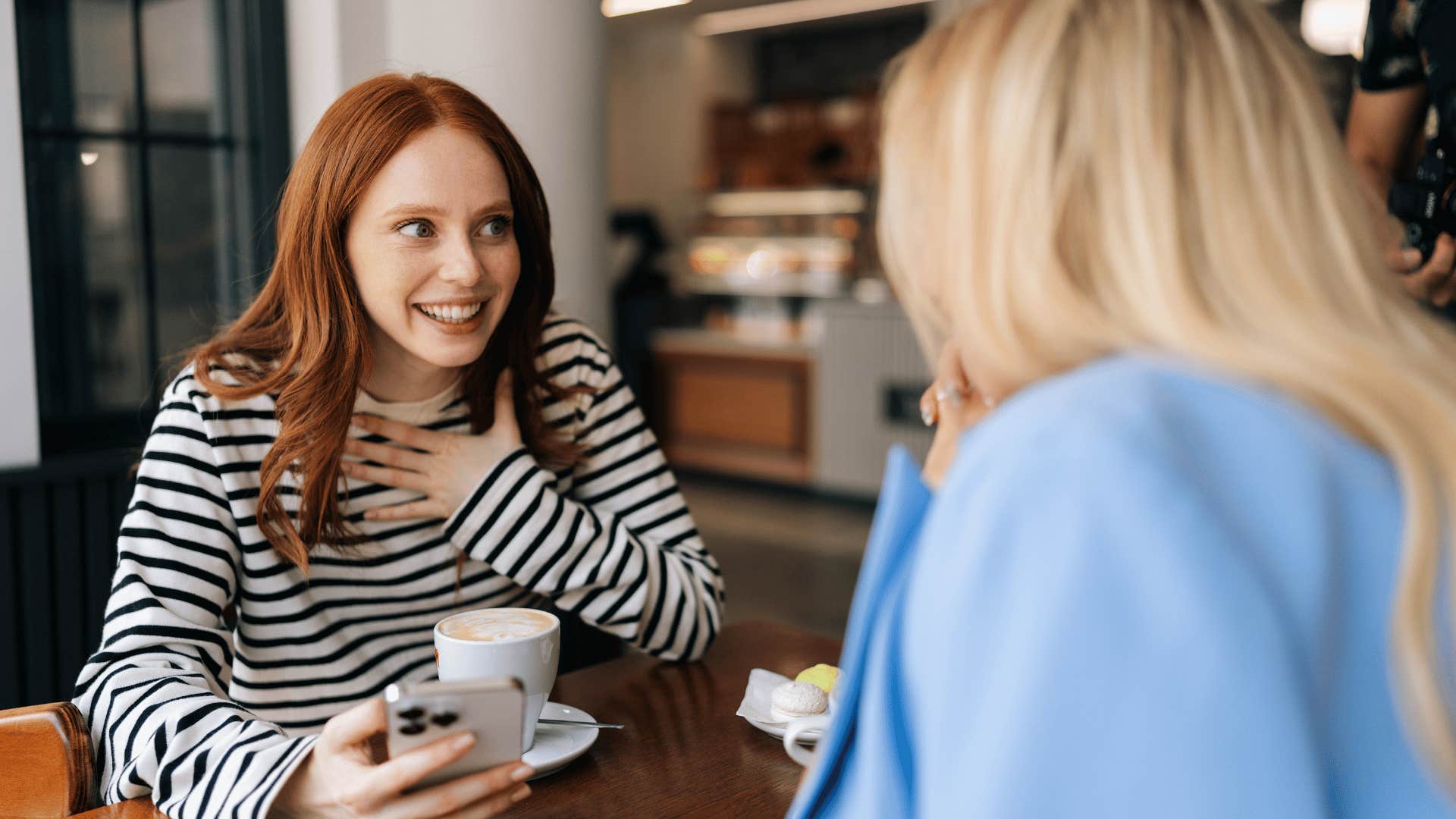
If you grew up as the youngest child in your family, you probably have incredibly communication skills as an adult. Because you tend to be more optimistic and extroverted than your older siblings, you're less likely to be afraid of making light conversations with strangers or putting yourself out there.
Younger siblings know themselves better because they've had more opportunities to explore their individuality. And, as a result, they're great at charming people since they're confident in what they have to say.
Licensed professional counselor Sara Shine explained that parents tend to be more lenient with their youngest child, making that kid feel more special and unique in the family. "They tend to be more rebellious and attention-seeking, creative, social, outgoing, and have a sense of openness," Shine added.
6. You love being the center of attention
 oneinchpunch | Shutterstock
The youngest child is used to being the center of attention because, growing up, they were likely pampered by their parents and taken care of by their older siblings. So, as adults, they continue to enjoy the spotlight and being front and center, no matter the situation.
Whether it's taking control of a group project or starring in a musical production, in their minds, that's the natural way things have always been. They often seek attention in their quest to feel important and loved; unfortunately, that may directly impact their relationships and those around them in a not-so-great way.
7. You need help mastering basic life skills
 PeopleImages | Shutterstock
When the youngest sibling calls their parents or older siblings, they're unafraid to cry onto the phone about how they didn't know it would cost $800 to change their tires or that the cost of monthly rent was so sky-high. They're so used to their family rushing to fix things for them that they may have never learned to be self-sufficient.
As adults, this can be dangerous. It puts unnecessary stress on those around them, and not having the ability to take care of their own basic needs can cost them emotionally, mentally, and financially.
Research published in the Journal of Family Psychology found that too much parental involvement leads to kids being unable to control their emotions, behavior, and attention. As adults, this can result in emotionally and behaviorally unstable people, constantly needing their parents or older siblings to step in for them.
8. You don't take life too seriously
 pics five | Shutterstock
Unlike their older siblings, the baby of the family is typically more relaxed and easygoing. They don't make a big deal out of life and refuse to think negatively.
Combined with their excellent social skills, is it any wonder youngest siblings are the funniest? At least, according to them, they are. A YouGov poll showed that 46% of younger siblings do think they're the funniest in the family.
When people consider how much responsibility older siblings carry, this shouldn't be a shock. While their siblings took on most of the responsibilities, the youngest child had more time to focus on the more light-hearted things in life.
9. You have a strong urge to go on adventures
 Sanja_85 | Shutterstock
As Sulloway wrote about, because their older siblings take on leadership roles in the family, the youngest child has to find their own "unoccupied family niche." In order to find their place not only in their family but in the world, they're more likely to be "more exploratory and open to experience."
Whether it's skydiving or exploring an abandoned house, these fun and outgoing people love the thrill of it all. And their siblings and parents could learn a thing or two from them.
10. You often spin stories
 PeopleImages | Shutterstock
When you combine all their wonderful attributes, like excellent communication skills and a desire to break the rules, you have a fine recipe for some exciting, if not entirely honest, story-telling. From a young age, the baby of the family knows they can get away with things that would have sent their parents into a rage if their older siblings had done them.
So, by the time they reach adulthood they are often extremely skilled at using their words to control people and situations, maintaining the spotlight while avoiding responsibility. It's a bit manipulative, but according to psychologist Alan E. Stewart, youngest-borns “may develop social skills that will get other people to do things for them, thus contributing to their image as charming and popular.”
11. You're highly adaptable
 BearFotos | Shutterstock
If you grew up as the youngest child in your family, you're probably highly adaptable as an adult. As you grew up, you likely realized that everyone had roles assigned to them, so instead of stepping on toes to carve your path to the top, you listened and learned the dynamic to your advantage. As an adult, that social intelligence helps you navigate all different kinds of situations.
You're used to stepping up to unexpected challenges and new environments, even if you don't quite like uncertainty. While some people struggle when they're thrown into unfamiliar situations, you treat it like familiar territory. But when you've spent years fitting into spaces rather than creating your own, it can take extra effort to pause and ask yourself where you truly stand.
Marielisa Reyes is a writer with a bachelor's in psychology who covers self-help, relationships, career, and family topics.

