
Parents With 11 Exceptionally Rare Traits Tend To Have The Best Relationships With Their Adult Children
 PeopleImages | Shutterstock
Along with a family's changing dynamics, experiences, and stressors over time, it can be incredibly difficult for parents, especially, to manage a healthy relationship with their own children as they grow into adults. Actively unlearning their children's adolescent identity is a common qualm amongst parents, and with navigating their adult child's decision-making power and autonomy, finding the right balance between supportive and overbearing is no easy feat.
But parents with certain exceptionally rare traits tend to have the best relationships with their adult children, because their bond is based on trust, unconditional love, and respect. Whether it's navigating conflict, being a shoulder to cry on, or giving advice, the healthiest parents aren't perfect, they're just consistent.
Parents with 11 exceptionally rare traits tend to have the best relationships with their adult children
1. They're trustworthy
 fizkes | Shutterstock
When parents show that they're trustworthy, whether it's being reassuring or providing a sense of security, it can make all the difference in a healthy relationship as their kids become adults. They'll never sell out their children's secrets for attention, blackmail them, or judge them for simply expressing their emotions. They recognize the power trust holds in a healthy relationship.
However, this kind of unwavering trust isn't something parents can cultivate overnight in their relationships with adult children, as it starts early in life. According to a study published in the Journal of Adolescence, the basis of this parental trust is knowledge. So, when parents know how their kids feel, their decision-making processes, values, and what they're doing, they can learn to trust their kids over time.
2. They respect their children's boundaries
 imtmphoto | Shutterstock
In her book "Boundaries: Where You End and I Begin," author Anne Katherine explains that healthy boundaries are the keys to harnessing balanced family dynamics and relationships into adulthood, even if it feels uncomfortable to set and reassert them.
Even if boundaries weren't necessarily discussed growing up, it's never too late to advocate for your own needs and emotional health, whether you're a parent or an adult child. Everyone wants to feel heard, loved, supported, and understood, and the same goes for parents. Because when they carve out space for their adult kids to feel safe, it shows just how rare of a parent they are.
3. They're flexible and open to change
 Chokniti Studio | Shutterstock
As their adult children learn and grow into their new lives, identities, and relationships, there's a foundational level of grace and flexibility parents need to adopt to protect their own emotional well-being, as well as their kids. Being flexible doesn't just mean parents are adaptable to change and willing to help out at inconvenient times, although those things are equally important. It's also an emotional and psychological kind of flexibility.
According to clinical psychologist Diana Hill, being a "psychologically flexible" parent simply means you're willing to be empathetic. It means listening to your adult children and providing support even when you don't agree or are struggling yourself. On the flip side, it doesn't mean completely disregarding your own needs and desires, but setting appropriate boundaries, too.
4. They're empathetic
 LightField Studios | Shutterstock
Empathetic parents who raised kids to be compassionate often instill those same traits in their children. They raised them with important skills like emotional intelligence and honest communication that set them up for success with their adult relationships and personal development.
So, while empathy might be generally selfless, it's also an exceptionally rare trait of parents who have the best relationships with their adult children. Their commitment to an empathetic parenting style genuinely benefits them when their kids enter into adulthood.
Family psychologist Jeffrey Bernstein argues that this empathy fuels the mutual understanding, validation, and communication that's ingrained into the healthiest of families, even amid additional stressors and anxieties that may come along with it.
5. They value small moments of gratitude
 fizkes | Shutterstock
While it's natural for families to experience separation into adulthood, as their children become their own person and start new lives, when parents maintain good relationships with their kids, they appreciate even the smallest moments together. All the wholesome conversations, quality time, and shared space they'd conveniently enjoyed for decades is now compact into a few short days over the holidays or scheduled into a weekend.
Healthy parents respect this inherent distance from their adult children. They don't show up announced or offer unprompted advice and criticism. Instead, they value the small, fleeting moments when they can express gratitude to their kids and appreciate their presence without judgment.
6. They're emotionally consistent
 Vergani Fotografia | Shutterstock
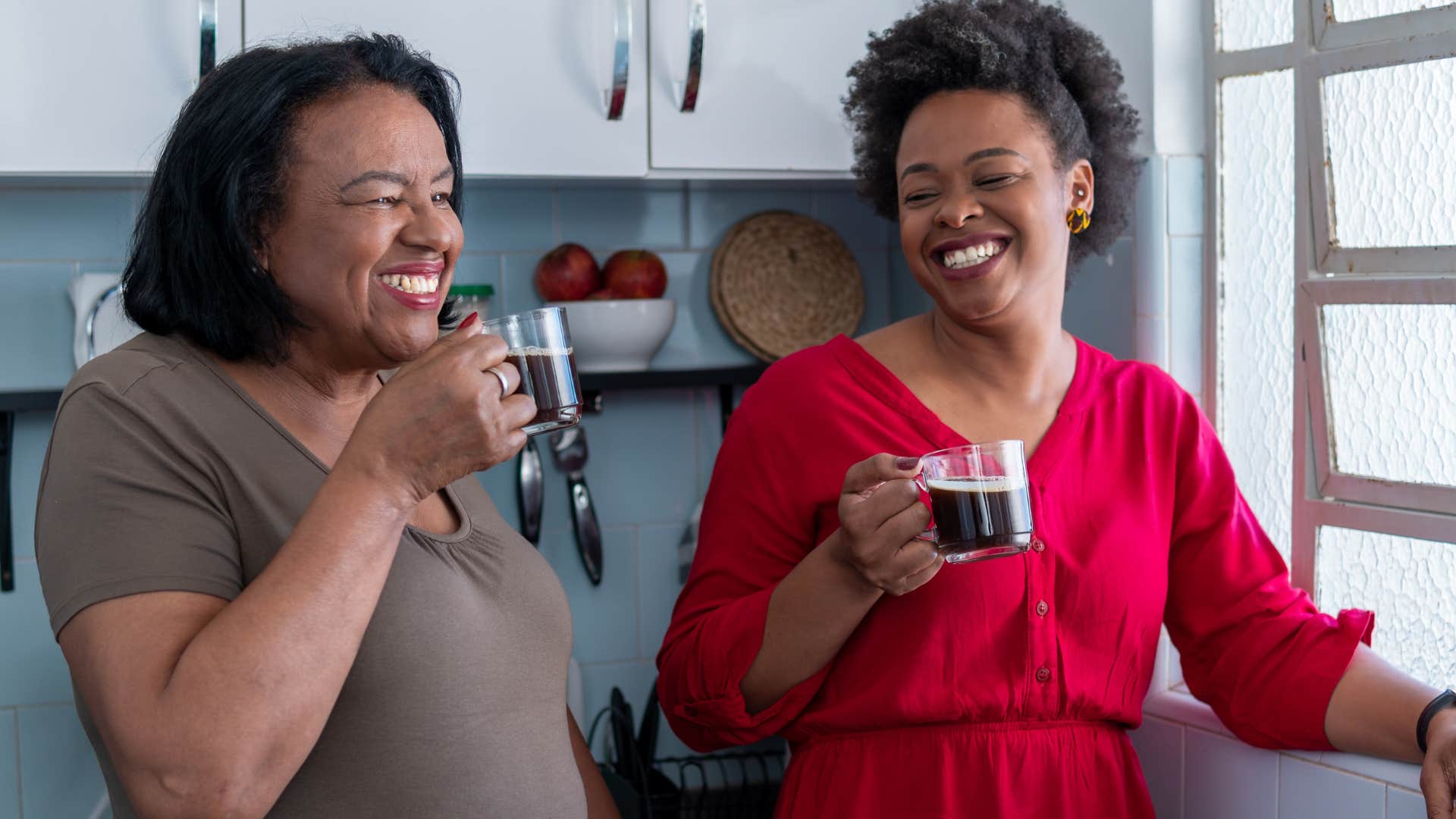
Being emotionally consistent lays a secure foundation for both parents and adult children to flourish. It gives them each the space to express their emotions, communicate honestly, and feel safe in their connection. Parents who are emotionally consistent help create healthy attachment styles in their kids that not only support the family dynamics, but protect their emotional health and well-being in adulthood.
According to a study from Psychological Reports, this kind of emotional consistency is not just a parent's ability to show up emotionally for their adult kids, but to show up for themselves as well. Parents who learn their own emotional regulation skills and emotional intelligence will be more balanced and supportive to everyone in their life.
7. They're reliable
 fizkes | Shutterstock
Outside of emotional stability and security, parents who have the best relationships with their adult children commit to reliability, even if it means showing up on time or helping them with a task. Their children were never forced to adopt anxious attachment styles at the hands of their parents' inconsistencies, and grew into a healthy mindset where they could rely on their parents when they struggled.
Of course, healthy parenting revolves around this inherent supportiveness and reliability. A study published in Cureus even revealed that rates of depression greatly decrease in children with supportive parents who not only emotionally support their children, but physically show up for them as well, even into adulthood.
8. They're open-minded and accepting
 Pond Saksit | Shutterstock
Many adult children hold onto a great deal of resentment towards their parents for having unmet emotional needs, a kind of uncomfortable and irreplaceable emotion that lingers well into adulthood and mature relationships. Either they struggled to get attention from their parents, leaving them feeling unheard, or they felt unloved because of a facet of their identity or personhood.
Good parents remove themselves from the judgment and unnecessarily critical mindsets that toxic parents tend to rely on, choosing instead to oepn their minds to change and vulnerability. By accepting their own identity and prioritizing their emotional health, they can do the same for their adult kids, celebrating their authenticity into adulthood.
9. They're great listeners
 Gladskikh Tatiana | Shutterstock
According to a study from the Journal of Humanistic Psychology, partners, friends, parents, and children feel most heard in relationships where a safe space has been established for active listening, open conversations, and genuine vulnerability. Parents who tend to have the best relationships with their adult kids start cultivating that open and honest atmosphere early in their childhood.
They equip their kids with the emotional intelligence and communication skills necessarily for healthy relationships later in life. Not only does this provide their relationship a venue to express concerns, find support, and resolve conflict, it keeps both parents and their adult children from feeling misunderstood or resentful.
10. They take accountability for their mistakes
 fizkes | Shutterstock
Along with genuinely listening and expressing empathy to their adult children, even during an argument or conflict, good parents also take accountability for their own mistakes. Instead of blame-shifting or trying to adopt a victim mentality, they own up to their errors and hurtful behaviors, even when it's uncomfortable.
According to psychologist Chivonna Childs, this tendency to blame-shift is one of the most common indicators of a toxic parent, especially one who constantly alienates their adult children and avoids true accountability. Without a foundation of trust and understanding, adult children can never fully open up to their parents or expect support when they're struggling or needing validation.
11. They're affectionate
 Chay_Tee | Shutterstock
Licensed psychologist Akilah Reynolds argues that children who don't receive the necessary affection and affirmation from their parents in childhood often experience higher rates of loneliness than their peers with outwardly loving parents. Kids who grew up with parents who acted like this likely don't have a strong bond with their family as a result, and may even cut their parents off for good.
But parents who are affectionate with their children usually have incredible relationships with them into adulthood. Even if it's expressing gratitude or giving them a hug, this kind of affection can be incredibly important for creating and maintaining healthy bonds within a family.
Zayda Slabbekoorn is a senior editorial strategist with a bachelor’s degree in social relations & policy and gender studies who focuses on psychology, relationships, self-help, and human interest stories.

