
People In Their 50s And 60s Say These 10 Things Help When Loneliness Feels Like Too Much
 Bricolage | Shutterstock
Anyone can feel the pain of loneliness, yet for many people in their 50s and 60s, loneliness can become especially intense. As social circles shift and routines change, those who have learned to cope often rely on simple but meaningful strategies to help restore a sense of connection.
Research has suggested that differing cultural factors, social and economic inequalities, and access to social safety nets can contribute to feelings of loneliness. The studies observed how elevated loneliness has the possibility of increasing a person's risk for depression, compromised immunity, chronic illness, and mortality.
People in their 50s and 60s say these ten things help when loneliness feels like too much:
1. People in their 50s and 60s don’t blame themselves
Trust me, self-blame will only make you feel worse. Blaming yourself for how you feel is never skillful, productive, or kind. A host of causes and conditions have come together in your life to create this painful feeling. It’s not your fault.
Psychologist Dr. Elayne Daniels explained, "You beat yourself up replaying scenarios in your head, convinced everything is your fault, even though you have no real reason to believe that's true. Instead of self-blame, shame, and guilt, try talking about the ways you have been affected by the difficult situation. Voicing the personal impact it has had on you will help strengthen your resilience."
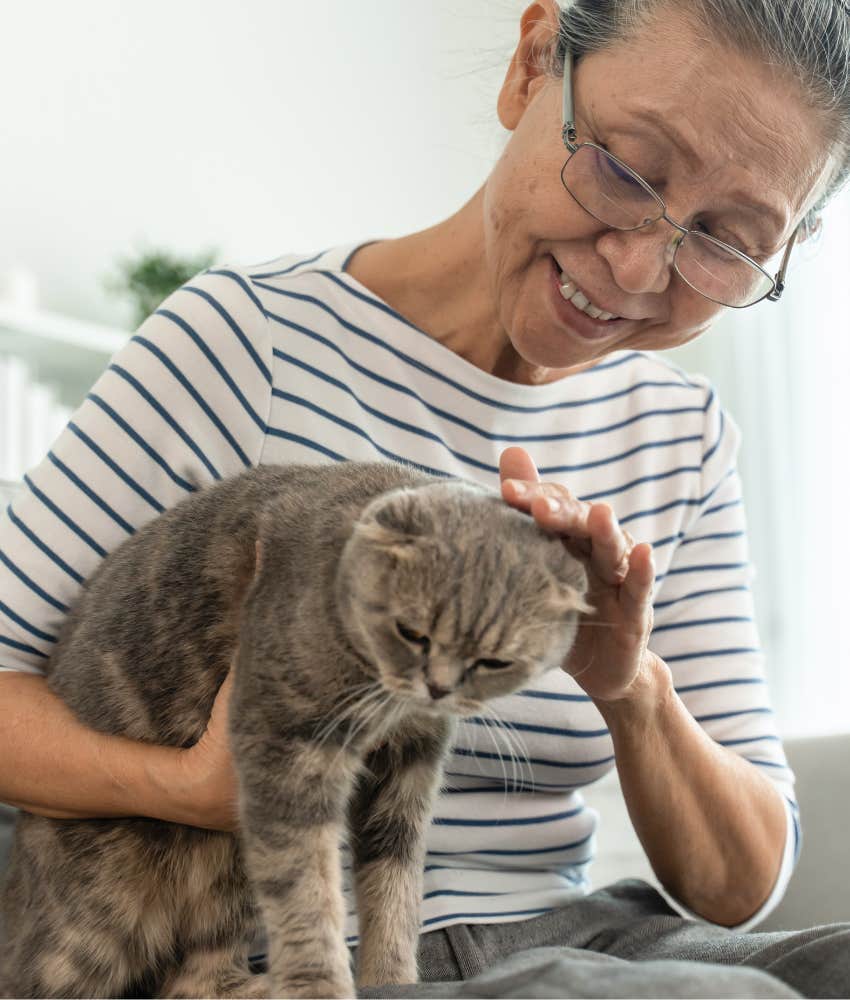
2. They seek comfort from a non-human friend
 Hananeko_Studio via Shutterstock
There are lots of possibilities to find comfort. A pet, your favorite food, a well-loved book, a nature show on TV, or even just sitting outside for a while. We can find solace in many things that ease the pain of loneliness. Experiment and see what helps you feel better.
"If you find yourself feeling [lonely] often, you might want to consider making lifestyle changes," suggested life coach Moira Hutchison. "Boosting social contacts in your daily life, having favorite alone time activities, and getting out and about are a few methods that can help you deal with this loneliness."
3. People in their 50s and 60s reach out to a real person
Think of someone who is always supportive or who simply makes you laugh, and give that person a call or send them an email. You may resist doing this at first because it can be hard to reach out to others when you’re feeling lonely. In my experience, however, it’s worth giving myself the little extra push that’s needed to contact someone I can count on.
Personal development coach Bill Protzmann advised, "When I want to crawl back under the covers is usually the time when I ought not to! The paradox is that at the times when I feel most vulnerable, I'm also the most open. If you feel that vulnerability and urge to stay isolated, that's the moment when change is nearest to you. Will you take that opportunity?"
4. They do something creative, no matter how simple
It need not be earth-shatteringly creative. Try a coloring book or a jigsaw puzzle, make a collage, or experiment with needlework of some kind. Or think outside the box and come up with something fun and soothing for you to do.
"Loneliness can lead to hostility, and that, in turn, can increase our loneliness and make it harder to emerge from its grip," explained psychologist Guy Winch, Ph.D. "Breaking free of loneliness requires determination, bravery, and often, a leap of faith — one we have to take despite our fear of getting hurt because reaching out is the only way to establish richer and deeper connections and emerge from loneliness."
5. People in their 50s and 60s look for small ways to help others
 Fit Ztudio via Shutterstock
Helping others eases loneliness because it makes us less self-focused. It could be an elderly neighbor or someone on a social media site who might benefit from a supportive comment.
Personal development coach Craig Nielson recommended, "There are numerous opportunities to volunteer in your community and no shortage of others who need help, so take the time away from yourself to focus on someone else. It may just be the thing you need to get you out of your funk and back into the world."
6. They give people the benefit of the doubt
Call to mind others who are feeling lonely and send them kind and compassionate thoughts. Wishing well to others who are lonely creates a special connection between the two of you. Even more, when you realize that you’re not alone in your loneliness, you’ll feel less lonely. At least, that’s how this little practice works for me.
Social worker Brock Hansen said, "By focusing on the needs and feelings of others, there will be less attention to your lonely thoughts and feelings. I can walk down the street thinking about myself, my loneliness, and the hopelessness of it all, staring at the sidewalk and sighing to myself. Or I can walk down the street, grateful for the diversity of people I get to share the sidewalk with, silently wishing them good health and good fortune, and smiling at each person I meet."
7. People in their 50s and 60s celebrate other people's happiness
Visualize someplace you’d like to be — a fun gathering, the seashore, a sporting event — and see if, just for a moment, you can feel happy for those who are there.
Feeling happy for others even when they’re doing what you wish you could do can make you feel as if you’re there with them, and that eases the pain of loneliness. Even if feeling happy for others only lasts a short time, it’s soothing and healing, and amazingly, it can even make you feel happy!
"Notice your thoughts," encouraged life coach María Tomás-Keegan. "If they are negative, change them to a more positive view and repeat that thought 10 times. This isn't about forcing fake positivity or denying reality. Instead, it's about finding a more balanced, constructive perspective that opens possibilities rather than closing them down."
8. They don't push painful feelings away
 pics five via Shutterstock
Treat loneliness as an old friend who’s dropped in for a visit (despite not having received an invitation). This is a way of not resisting how you’re feeling; resisting only makes you feel worse. Zen teacher Thich Nhat Hanh asks us to take care of our anger and other painful emotions.
Making friends with how we feel is self-compassion in action. So take care of your loneliness as if it’s an old friend. Sometimes I say, “Hello, loneliness. I see you’ve come to visit again for a while.” When you let painful emotions into your heart with compassion, it disarms them, and that takes away their sting. This eases your pain.
9. People in their 50s and 60s remember that no feeling lasts forever
Remind yourself that life is not always fun, and that tomorrow is a new day. Nobody gets their way all the time and—let’s face it—life isn’t always fun. This is true for everyone. The bottom line is that loneliness is one of those unpleasant moments in your life. That’s all it is.
If you can be patient with your loneliness, it’s likely that by tomorrow, it will have eased a bit. Then, the next day, it’s likely to have eased even more. All emotions are impermanent. They arise and pass, arise and pass.
10. They sing just for the joy of it
It’s almost impossible to feel lonely when you’re singing. I’ve tried it, and it works. Sing solo or let your favorite singer keep you company as you sing together.
Confidence coach Lisa Petsinis explained, "Singing makes you happier. Do it often and don't be afraid to belt out your tunes. You'll feel more positive, confident, and ready to take on your next challenge. Singing decreases mental distress while increasing positive emotions and reducing anxiety and depression."
I know from personal experience that loneliness can be hard to bear. I hope this piece has given you some useful ideas to try.
Toni Bernhard is a former law professor at the University of California, Davis. She's a best-selling author, popular blogger, and contributor to Psychology Today.

